Product
Claim Car Expenses: Tax Records for Australian Employees
25 July 2026 • 10 min read

Quick Answer for an Employee Using Their Own Car
To claim car expenses at tax time as an Australian employee, first separate journeys made while performing your work from ordinary private travel. A trip to visit a client, move between workplaces, or collect work supplies may be relevant. Your normal trip from home to your regular workplace is generally private, even if you work outside usual hours or carry everyday work items.
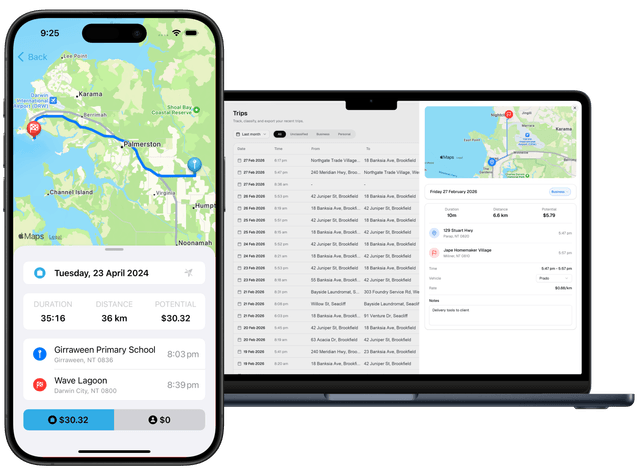
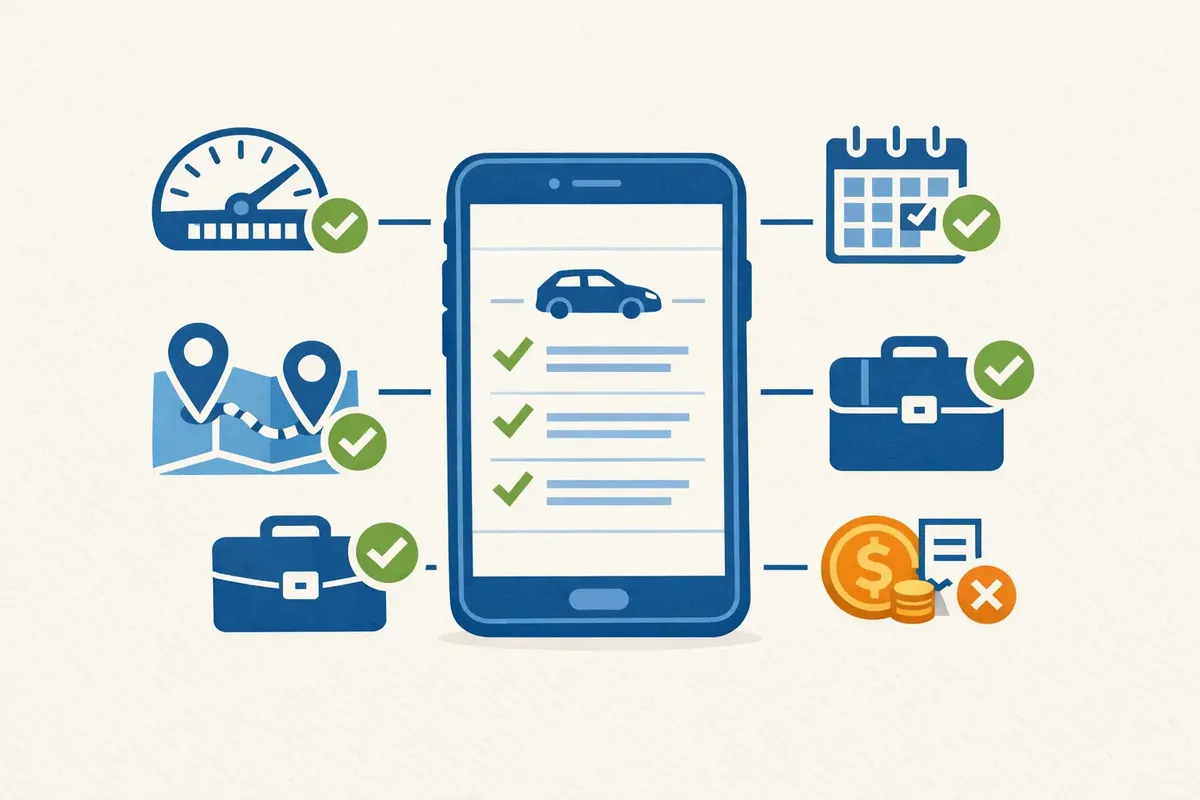
For every potentially eligible journey, record the date, start and destination, kilometres, specific work purpose, vehicle, and whether your employer reimbursed you. Do this when the trip happens. A clear trip history is more useful than a calendar reconstructed months later, and it preserves evidence while you decide which ATO calculation method fits your circumstances.
This guide is for employees using a car they own or lease. It helps you classify and record trips; it does not determine that every recorded trip is deductible. Check the ATO’s current motor vehicle and car expense guidance or speak with a registered tax agent when a journey is unusual.
Start recording work trips with DriveLog
Three Eligibility Tests Before Recording a Trip
Use these three tests as a first-pass screen. Passing them means the trip is worth documenting and checking against the ATO rules; it is not an automatic deduction.
1. Did you incur the car expense?
The car should be one you own or lease, and the expense must be connected with using it. If your employer supplied the vehicle or fully reimbursed the expense, you generally cannot claim that same expense yourself. Record reimbursement status beside the trip so it is not overlooked later.
2. Was the journey made while doing your job?
Focus on what the trip accomplished. Travel between two separate workplaces, from your regular workplace to a client, or to collect work equipment is different from simply getting yourself to work. Write a concrete purpose such as “client equipment check—Palmerston” instead of “business”.
3. Can you separate the work portion from private travel?
Mixed-purpose travel needs care. A work stop added to a private journey does not necessarily turn the whole journey into work travel. Record the actual route and the reason for each leg. That detail lets you identify the supportable portion later rather than treating an entire day as one trip.
The ATO also describes limited situations where home-to-work travel can be treated differently, including some cases involving bulky tools or shifting places of employment. These rules depend on facts, so capture the circumstances and verify them rather than applying a shortcut.
Work-Trip Classification Table
The table below is a recording prompt, not a substitute for the ATO rules.
| Journey | First-pass classification | Evidence worth capturing |
|---|---|---|
| Home to your regular workplace | Generally private | Date and route only if a specific exception may apply |
| Regular workplace to a client or customer | Potentially work-related | Client, task, start and destination, kilometres |
| One workplace to a second workplace | Potentially work-related | Both workplaces, work purpose, route and distance |
| Workplace to collect supplies or equipment | Potentially work-related | Supplier, items or task, route and kilometres |
| Home directly to an alternative work site | Depends on the circumstances | Why the site was required, whether it was temporary, route and purpose |
| A private errand during a work day | Private component | Separate the private leg instead of grouping it with work travel |
| Carrying ordinary work items on a normal commute | Generally private | Note the items only if you believe a specific ATO exception applies |
| Travel after an employer reimbursement | Check before claiming | Reimbursement amount, what it covered, and the related trip |
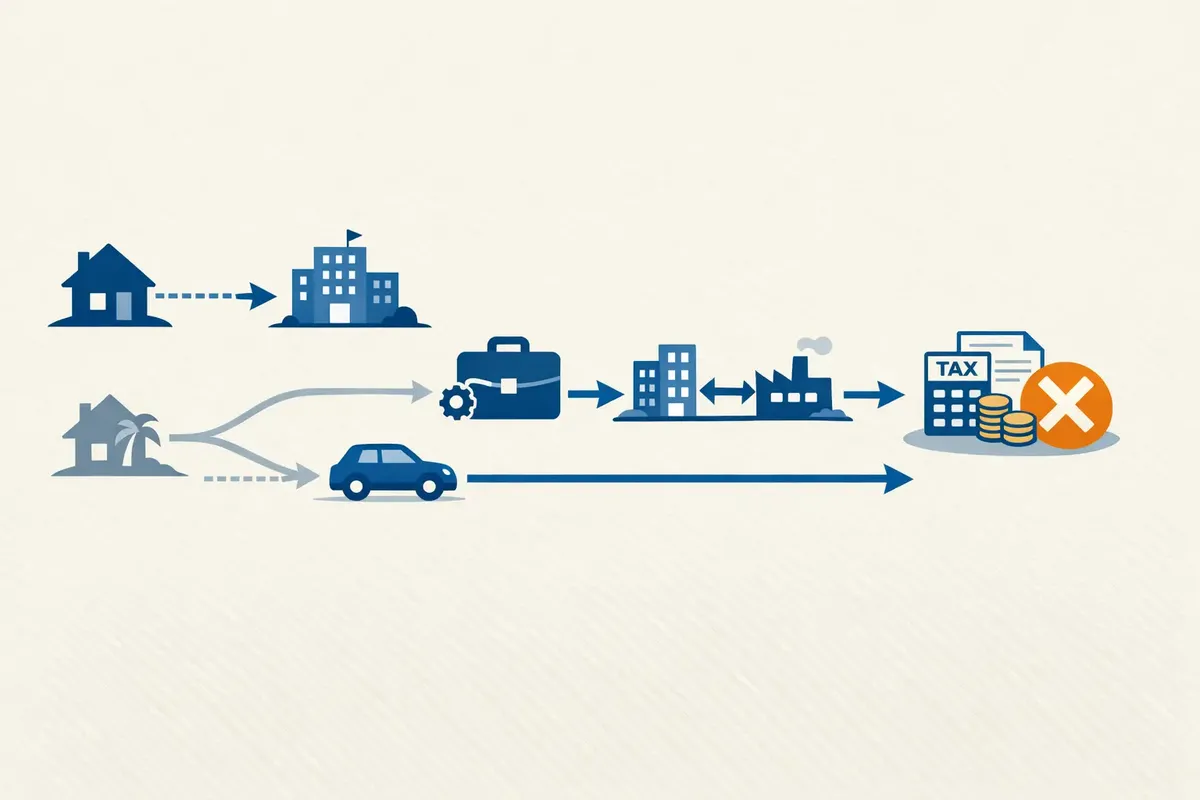
Two trips that look similar on a map can receive different treatment because their purposes differ. “Home to office” is normally commuting; “office to temporary project site for an inspection” records a task performed during the workday. The purpose field should explain that distinction without relying on memory.
Record-First Workflow
A record-first workflow keeps useful evidence before tax time and avoids choosing a calculation method too early.
Step 1: Capture the journey as it happens
Record the date, vehicle, starting point, destination, and kilometres. An automatic mileage log can reduce missed trips, but review it while the purpose is still fresh.
Step 2: Write a specific work purpose
Name the client, site, meeting, delivery, or task. Avoid labels such as “work”, “appointment”, or “other”. A reviewer should be able to understand why the journey occurred without guessing.
Step 3: Mark private and mixed-purpose legs
Keep each materially different leg separate. If you travel from the office to a client and then detour for a private errand, do not describe the whole route as client travel. Classifying the legs now is easier than estimating them later.
Step 4: Record reimbursement status
Note whether your employer paid a mileage allowance, reimbursed a specific expense, or paid nothing. Keep the related payslip, expense report, or reimbursement record. An allowance and a reimbursement are not necessarily treated identically, so preserve the facts for your return or tax agent.
Step 5: Review the week
Once a week, check incomplete purposes, duplicate journeys, vehicles, and distances. Compare important trips with your work calendar or job records. A five-minute review prevents an unlabeled backlog from becoming a year-end reconstruction exercise.
Step 6: Retain the supporting context
Depending on the trip, useful supporting records may include calendar entries, customer appointments, job sheets, invoices, emails, parking records, or toll statements. Keep evidence that explains the work connection; collecting unrelated paperwork does not improve the record.
One-Week Record Example
Imagine Priya is an employee who normally works at a Darwin office and occasionally visits other locations. Her weekly trip review could look like this:
| Date | Journey | Kilometres | Purpose | Reimbursement | Initial treatment |
|---|---|---|---|---|---|
| Monday | Home → Darwin office | 12 | Normal commute | No | Private |
| Tuesday | Darwin office → Palmerston client | 23 | Install and test client equipment | No | Check as work-related |
| Tuesday | Palmerston client → Darwin office | 22 | Return after client installation | No | Check as work-related |
| Wednesday | Home → Darwin office | 12 | Normal commute | No | Private |
| Thursday | Darwin office → Winnellie supplier | 9 | Collect replacement part for job 1842 | Fully reimbursed | Exclude reimbursed expense |
| Friday | Darwin office → temporary project site | 16 | On-site safety inspection | No | Check as work-related |
| Friday | Project site → supermarket → home | 21 | Private shopping after site visit | No | Separate and verify each leg |
This record does not claim a deduction by itself. It gives Priya a defensible starting point: ordinary commutes are identified, work tasks are specific, reimbursement is visible, and the mixed Friday journey has not been casually labelled as wholly work-related.
If Priya later needs more evidence, she can match Tuesday’s trips to the client appointment and Thursday’s journey to the expense report. That is much stronger than trying to remember every stop after the income year ends.
Calculation-Path Handoff
Once you have a supportable set of eligible work journeys, choose the calculation path separately. DriveLog maintains focused guides so this page does not blur trip eligibility with method arithmetic:
- Use the ATO logbook vs cents per kilometre comparison to understand the two methods at a high level.
- Check the current ATO cents per kilometre rate for the applicable income year.
- Test a work-distance total with the cents per kilometre calculator.
- Read the ATO logbook method guide if you need the detailed logbook setup and record rules.
Do not add the same cost twice or assume that recording a trip guarantees it can be claimed. The method you use changes the calculation and supporting records, but the work connection still matters.
Claim Preparation Checklist
Before you or your tax agent prepare a car expenses tax deduction, check that you can answer each point:
- The vehicle is a car you own or lease, and you have identified which vehicle made each trip.
- Ordinary commuting and private detours are separated from potential work travel.
- Every included trip has a date, distance, route, and specific work purpose.
- Mixed-purpose journeys are split into their relevant legs.
- Employer allowances and reimbursements are recorded and supported.
- Important trips can be matched to work records such as appointments or job sheets.
- You have checked current ATO guidance for any exception you rely on.
- Your chosen calculation method and its additional records are complete.
- The income year, rate, and limits used in the calculation are correct.
- Any uncertainty is flagged for a registered tax agent instead of silently assumed.
Common Questions
Is travel from home to work claimable?
Ordinary travel between home and your regular workplace is generally private, even if you work outside normal hours. Limited exceptions can apply in specific circumstances, so record the facts and check the current ATO guidance rather than treating every home-based trip the same way.
What should I write as the trip purpose?
Use a short description that connects the journey to a work task: “client stocktake—Berrimah”, “collect replacement pump—job 1842”, or “travel between Darwin and Palmerston offices”. Avoid a generic label such as “work”.
Can I claim a car trip my employer reimbursed?
You generally cannot claim an expense that your employer fully reimbursed. Record what was paid and what it covered because an allowance, partial reimbursement, and full reimbursement can involve different facts.
Do I need to decide between the ATO methods before tracking trips?
No. Capturing accurate trips first preserves evidence while you assess the available methods. The calculation decision can follow once you know your eligible distance and have the records required for your circumstances.
Does an app make a trip automatically deductible?
No. A mileage app helps capture and organise journeys; it does not decide their tax treatment. You remain responsible for classifying trips correctly and keeping any additional evidence the ATO requires.
Official Sources
The eligibility and record-keeping guidance in this article was checked on 25 July 2026 against:
- ATO motor vehicle and car expenses
- ATO expenses for a car you own or lease
- ATO employee guide to car expenses
- ATO cents per kilometre deduction rate
Rules depend on your circumstances and can change. Treat this guide as general information, not personal tax advice.
Build the Record Before Tax Time
The best time to identify a work trip is when you know why it happened. Capture the route and purpose, separate private travel, review reimbursement, and resolve unusual cases while the supporting context still exists. When tax time arrives, you can then apply the appropriate ATO method to a cleaner, more defensible trip history.