Page
ATO Cents per Kilometre Calculator (2026–27)
8 May 2024 • 5 min read
Calculate your 2026–27 cents per kilometre deduction
Quick answer: For the 2026–27 income year, multiply your eligible work-related kilometres by $0.91, up to 5,000 kilometres per car. For example, 2,500 eligible kilometres produces a calculated deduction of $2,275. You still need records showing how you worked out the work-related distance.
The 2026 determination sets the rate at 91 cents per kilometre from 1 July 2026. The ATO explains that this is an 89-cent base rate plus a temporary 2-cent uplift for 2026–27. See our detailed ATO cents per kilometre rate guide for the rate announcement and prior-year context.
Calculation formula
Use this formula after identifying the trips that qualify as work-related:
Eligible work kilometres × $0.91 = calculated deduction
| Eligible work kilometres | Calculation | Calculated deduction |
|---|---|---|
| 1,000 km | 1,000 × $0.91 | $910 |
| 2,500 km | 2,500 × $0.91 | $2,275 |
| 5,000 km | 5,000 × $0.91 | $4,550 |
The 5,000-kilometre cap applies per car. It is a maximum, not an automatic entitlement: claim only the eligible distance you can reasonably support.
Use the DriveLog ATO mileage calculator
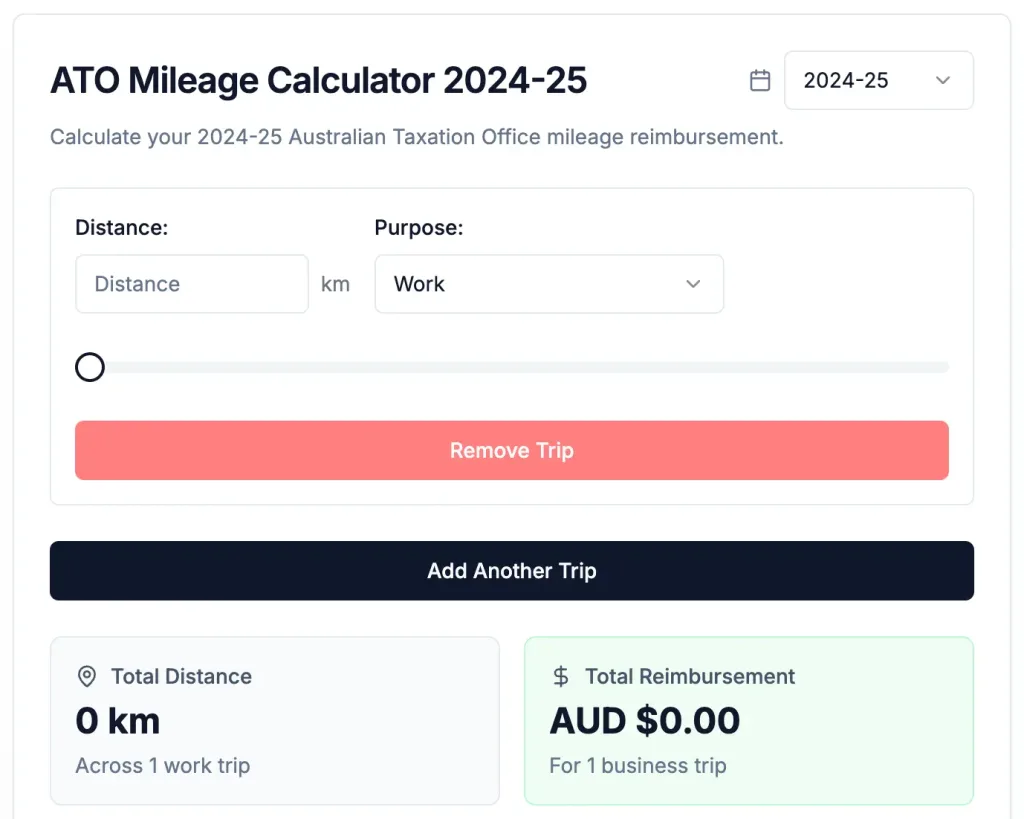
Enter your eligible kilometres in the DriveLog ATO mileage calculator to estimate the deduction. Check the result against your trip records before using it in a tax return.
Which kilometres can you include?
Use kilometres travelled while earning assessable income, subject to the ATO’s eligibility rules. Travel directly between workplaces or to perform work duties may qualify, while the ordinary trip between home and a regular workplace is generally private except in limited circumstances.
Review the ATO’s current cents per kilometre method guidance if you are unsure whether a trip qualifies. The calculator estimates an amount; it does not decide whether the underlying travel is deductible.
What records should you keep?
You do not need receipts for each individual car expense when using this method, but the ATO may ask you to show how you calculated your eligible work kilometres. A diary, calendar, or trip log can record:
- the date and purpose of each work trip
- the start and end locations
- the distance travelled
- how the total used in your calculation was produced
The cents per kilometre rate is designed to cover eligible car costs such as fuel, registration, insurance, maintenance, and decline in value. Do not claim those same car costs again separately for kilometres calculated with this method.
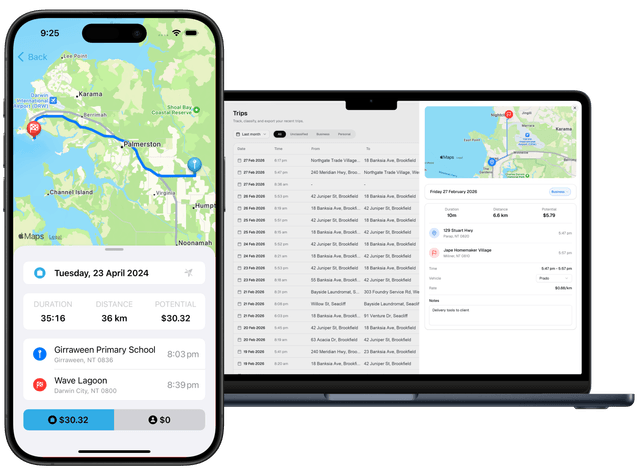
DriveLog can help you track mileage on your iPhone and keep trip details together. You remain responsible for classifying trips correctly and retaining records that support your claim.
What if you travel more than 5,000 work kilometres?
The cents per kilometre calculation stops at 5,000 eligible kilometres per car. If you travel farther, compare the result with the ATO logbook method, which uses the work-use percentage of eligible actual car expenses rather than a per-kilometre rate.
The logbook method requires more records, including a representative continuous 12-week logbook and evidence of relevant car expenses. It may produce a different result, so use the method that applies to your circumstances and that you can support with records.
Keep work trips ready for tax time
Download DriveLog for iPhone to record work trips as they happen and export organised mileage records when you need them.
Sources checked 14 July 2026: ATO 2026 rate notice, 2026 legislative determination, and ATO cents per kilometre guidance. This is general information, not tax advice.