Product
ATO Logbook Method 2026-27: 12-Week Rules and Records
8 July 2026 • 8 min read
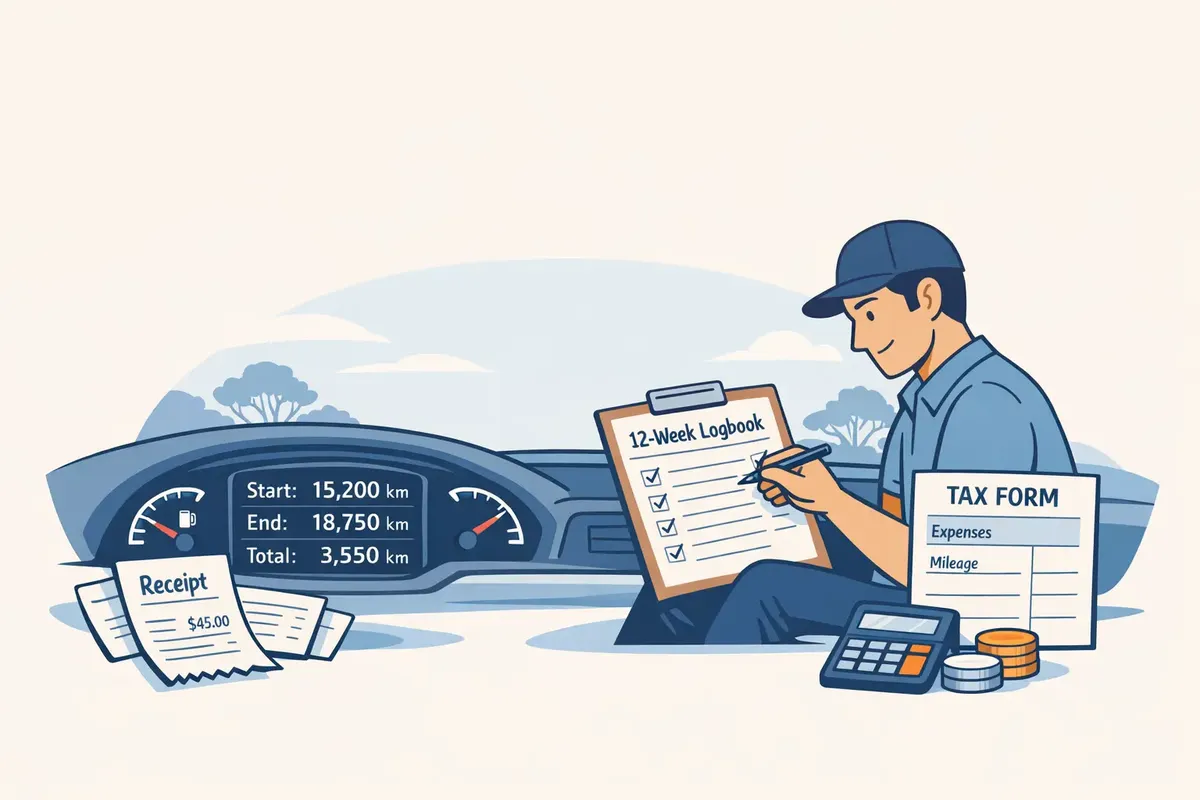
Quick Answer: ATO Logbook Method (Australia)
The ATO logbook method calculates the work-related share of eligible actual car expenses using a representative record of your driving.
To use it, you keep a logbook for a continuous period of at least 12 weeks, work out your business-use percentage, and apply that percentage to your eligible car expenses.
As checked on July 19, 2026, the ATO guidance states that:
- the logbook period must cover at least 12 continuous weeks and reflect your normal driving pattern
- a valid logbook can be used for up to 5 income years (if your circumstances stay representative)
- each trip entry needs enough detail to establish its work purpose and distance
- you must keep the required annual odometer and car-expense records
This page is the detailed setup and compliance guide. If you are still choosing a claim method, use the separate logbook vs cents per kilometre comparison to calculate both results without duplicating the guidance here.
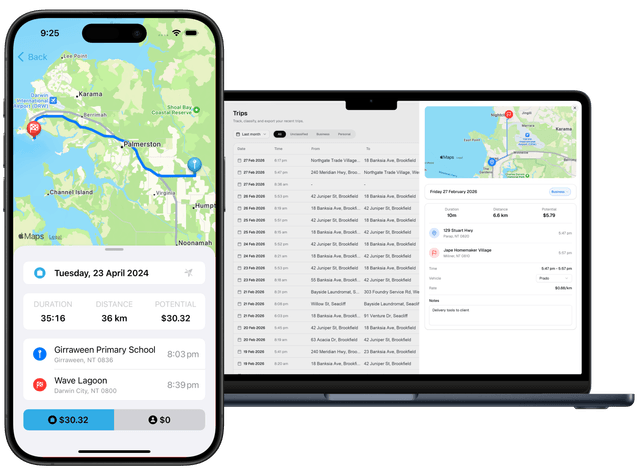
Track and classify trips automatically with DriveLog
ATO Logbook Requirements (What You Must Record)
For a compliant logbook period, the ATO requires specific trip details and odometer evidence.
1. Keep a continuous 12-week representative logbook
Your logbook period must run for at least 12 continuous weeks and represent your normal business-use pattern.
2. Record trip-level details during that period
For each journey in the logbook period, record:
- destination
- purpose of the journey
- odometer at trip start
- odometer at trip end
- kilometres travelled
3. Record odometer readings at required checkpoints
You should have:
- odometer reading at the start and end of the logbook period
- odometer readings for the start and end of the full period you claim for the income year
4. Keep evidence of car expenses
For the logbook method, keep records/receipts (or accepted estimate records where relevant) for expenses such as:
- fuel and oil
- servicing and repairs
- insurance
- registration
- lease payments (if applicable)
- interest (if applicable)
- decline in value and purchase records
5. Know how long the logbook remains valid
A compliant logbook can be valid for up to 5 years if your usage pattern remains representative. If circumstances change materially (for example job role, work location, or travel pattern), you should complete a new 12-week logbook.
How to Calculate Your Deduction With the Logbook Method
The calculation framework is straightforward:
Deduction = Total eligible car expenses x Business-use percentageYour business-use percentage comes from the logbook period.
Worked example (2026-27)
- Total eligible annual car expenses: AUD 12,400
- Business-use percentage from logbook: 64%
- Deduction: 12,400 x 0.64 = AUD 7,936
The calculation is only supportable when the logbook, annual odometer readings, and expense evidence agree. Keep the percentage calculation with the records used to produce it so an accountant or reviewer can reproduce the result.
Step-by-Step Setup Checklist (First 30 Minutes)
Use this setup sequence so your first 12-week period is easier to defend later.
- Pick a start date that reflects normal work activity.
- Confirm which vehicle is being claimed and whether ownership/lease requirements are satisfied.
- Capture opening odometer reading.
- Record every work trip during the 12-week window.
- Keep fuel and expense evidence from day one.
- Capture closing odometer reading at end of the period.
- Calculate business-use percentage and store it with supporting records.
- Continue annual odometer start/end captures for each year you rely on the logbook.
Common Mistakes That Trigger Problems
Most claim issues are avoidable. The common failure points are:
- incomplete trip purpose notes (for example, “meeting” without client/site context)
- gaps in the 12-week period
- forgetting yearly start/end odometer records
- using an old logbook after major role/location change
- poor evidence for expense totals and decline in value
A good standard is that another person (accountant or reviewer) can reproduce your business-use percentage and annual claim from your records without assumptions.
How DriveLog Helps With a 12-Week Logbook
The hard part of the logbook method is not the formula. It is keeping a complete, representative trip record while normal work is happening.
DriveLog helps by giving you one place to:
- capture trips as they happen
- classify work and private driving
- add trip purpose notes while the reason is still fresh
- keep vehicle and odometer context together
- review trips weekly during the 12-week period
- export records when you or your accountant need to calculate the claim
For logbook users, the best workflow is simple: start the 12-week period deliberately, check classifications every few days, and fix missing trip details while you still remember them. Waiting until tax time is where most weak logbooks become hard to repair.
ATO Sources and Last-Checked Dates
The core guidance for this article comes from ATO pages checked on July 19, 2026:
- Expenses for a car you own or lease
- Logbook method
- D1 work-related car expenses 2026 instructions
- Records you need to keep
FAQ: AU Logbook Method
How long does an ATO logbook stay valid?
Generally up to 5 income years, as long as it remains representative of your work-related use pattern.
Does the ATO logbook method require exactly 12 weeks?
It requires at least 12 continuous weeks. Longer is fine, but shorter is not compliant for establishing the representative pattern.
What details must each logbook trip include?
Record the destination and purpose of the journey, the odometer readings at the start and end, and the kilometres travelled.
What if I change jobs or move and my driving pattern changes?
You should start a new 12-week logbook if the old one is no longer representative.
Do I still need odometer readings after the 12-week period?
Yes. You still need required odometer records for the claim period, including start and end readings for the full period you claim.
What car-expense evidence should I keep?
Keep the records that support each eligible cost used in the calculation, including receipts or accepted records for fuel, servicing, insurance, registration, finance or lease costs, and decline in value where relevant.
Final Takeaway
The logbook method depends on disciplined record-keeping: a representative 12-week record, complete odometer checkpoints, and evidence for the eligible expenses in your calculation.
If you want to reduce admin while keeping a claim-ready record trail, use a digital workflow and review your data monthly rather than waiting until tax time. If you have not chosen a method yet, use the separate logbook vs cents per kilometre comparison.