Product
ATO Logbook vs Cents per Kilometre: Which Method Is Better?
19 July 2026 • 10 min read
Quick Answer: Logbook vs Cents per Km
For 2026-27, the ATO cents per kilometre method pays 91 cents for each eligible work kilometre, capped at 5,000 km per car. That makes its maximum deduction $4,550 per car. It is usually the simpler choice when your work travel is below the cap and you do not want to calculate actual car costs.
The logbook method uses your business-use percentage and actual eligible car expenses. It can produce a larger deduction when you drive more for work, have high vehicle costs, or have a strong business-use percentage—but it requires a representative logbook kept for at least 12 continuous weeks plus expense and odometer records.
The practical way to choose is to calculate both results before lodging. You may choose a different method in a later income year, but you cannot claim the same car expenses twice.
Track your work trips with DriveLog
ATO Cents per Kilometre vs Logbook at a Glance
| Question | Cents per kilometre | Logbook method |
|---|---|---|
| How is the deduction calculated? | Eligible work km × the ATO rate | Eligible actual car expenses × business-use percentage |
| 2026-27 rate or limit | 91c/km, maximum 5,000 km per car | No fixed kilometre cap |
| Maximum fixed result | $4,550 per car | No fixed dollar maximum |
| Main records | How you worked out eligible work kilometres | 12-week representative logbook, annual odometers, and expense evidence |
| Usually suits | Lower or moderate work kilometres and simpler record-keeping | Higher work use or higher actual car costs |
| Includes running costs in the calculation? | Yes—the rate already covers them | Yes—eligible actual costs are used directly |
This comparison applies to a car you own or lease and use to earn assessable income. Different rules can apply to vehicles that are not treated as cars for ATO purposes, and normal travel between home and a regular workplace is generally private.
How the Cents per Kilometre Method Works
For the income year beginning 1 July 2026, the official ATO rate is 91c per eligible work kilometre. The formula is:
Cents per kilometre deduction = eligible work km × $0.91The method stops counting at 5,000 work kilometres for each car. Examples for 2026-27 are:
| Eligible work kilometres | Calculation | Deduction |
|---|---|---|
| 1,500 km | 1,500 × $0.91 | $1,365 |
| 3,000 km | 3,000 × $0.91 | $2,730 |
| 5,000 km | 5,000 × $0.91 | $4,550 |
| 7,000 km | capped at 5,000 × $0.91 | $4,550 |
You do not need receipts for every individual car expense under this method because the rate incorporates running costs and decline in value. You do, however, need records showing how you calculated your eligible work kilometres. A calendar, diary, trip record, or recurring travel calculation may support the figure, depending on your circumstances.
Do not add fuel, servicing, insurance, registration, or depreciation again on top of the cents per kilometre result. Those costs are already represented by the rate.
For more detail, see the ATO cents per kilometre rate for 2026-27 and test your distance with the cents per kilometre calculator.
How the Logbook Method Works
The logbook method calculates the work-related share of eligible actual car expenses:
Logbook deduction = total eligible car expenses × business-use percentageYour business-use percentage is based on a representative logbook period of at least 12 continuous weeks. During that period, record each journey’s date, start and finish odometer readings, kilometres travelled, and reason for the trip. You also need the car’s odometer readings at the beginning and end of the income year, plus evidence for the expenses included in your calculation.
Eligible costs may include fuel and oil, registration, insurance, servicing, repairs, interest or lease costs, and decline in value, subject to the ATO rules for your circumstances. The logbook method is not simply “claim every car bill”: private use must be excluded through the business-use percentage, and each expense still needs to be eligible and supported.
A valid logbook can generally be used for up to five income years if it remains representative. A significant change in your work or driving pattern can mean you need a new logbook.
Our ATO logbook method guide explains the 12-week rules and annual records in detail.
Calculate Your Break-Even Point
The best method is not decided by kilometres alone. Compare the cents result with the work-related share of actual costs.
Step 1: Calculate the cents result
Use your eligible work kilometres, up to 5,000:
Eligible work km × $0.91Step 2: Estimate the logbook result
Add your eligible annual car expenses and multiply them by your business-use percentage:
Eligible car expenses × business-use percentageStep 3: Compare like with like
If the logbook result is greater, the extra record-keeping may be worthwhile. If it is lower, cents per kilometre may give the better result with less administration.
When you have at least 5,000 eligible work kilometres, the maximum cents result is $4,550. You can estimate the business-use percentage needed for logbook to exceed it:
Break-even business-use percentage = $4,550 ÷ eligible annual car expenses| Eligible annual car expenses | Business-use needed to exceed $4,550 |
|---|---|
| $8,000 | 56.9% |
| $10,000 | 45.5% |
| $12,000 | 37.9% |
| $15,000 | 30.3% |
This is a screening calculation, not tax advice or a final claim. It helps you decide whether maintaining a compliant logbook is likely to be worth the effort.
Worked Example: The Same Driver Under Both Methods
Suppose an Australian sole trader records 6,200 eligible work kilometres in 2026-27. Their eligible annual car expenses total $10,000, and their representative logbook shows 50% business use.
Cents per kilometre:
5,000 km cap × $0.91 = $4,550Logbook method:
$10,000 × 50% = $5,000On these figures, the logbook method produces a result $450 higher. If the same driver’s business use were 40%, the logbook result would be $4,000 and cents per kilometre would be $550 higher.
The example also shows why “I drove more than 5,000 km” does not automatically make logbook better. The actual expenses and supportable business-use percentage still determine the outcome.
Which Method Is Likely to Suit You?
Cents per kilometre may suit you when
- your eligible work driving is comfortably below 5,000 km
- your actual car costs or work-use percentage are relatively low
- you want a simpler calculation and can substantiate your work kilometres
- the cents calculation is equal to or higher than the logbook estimate
The logbook method may suit you when
- you drive more than 5,000 eligible work kilometres per car
- your car is expensive to run or has a meaningful decline-in-value amount
- a substantial share of the car’s use is work-related
- your estimated logbook result exceeds the cents result by enough to justify the records
There is no universal winner. Running both calculations is more reliable than choosing from a rule of thumb.
Records to Start Keeping Now
You do not have to wait until tax time to decide. Keeping trip records now preserves both options.
For either method, record:
- the date and distance of each work trip
- the work purpose, client, site, or task
- enough detail to separate private and work travel
- the vehicle used when you have more than one car
If logbook might be competitive, also:
- Start a representative 12-week logbook during normal work activity.
- Capture opening and closing odometer readings.
- Keep receipts and evidence for eligible car costs.
- Record the income year’s opening and closing odometers.
- Revisit the logbook if your work or driving pattern changes materially.
Weekly reviews are easier than reconstructing months of travel later. A clear trip purpose such as “client inspection—Palmerston” is more useful than a vague label such as “work”.
How DriveLog Helps You Compare Both Methods
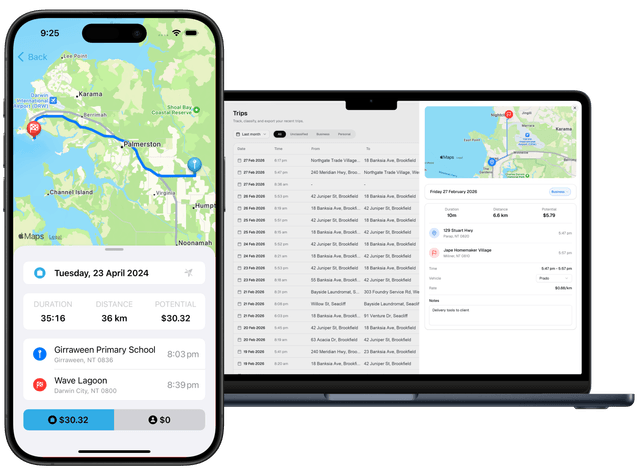
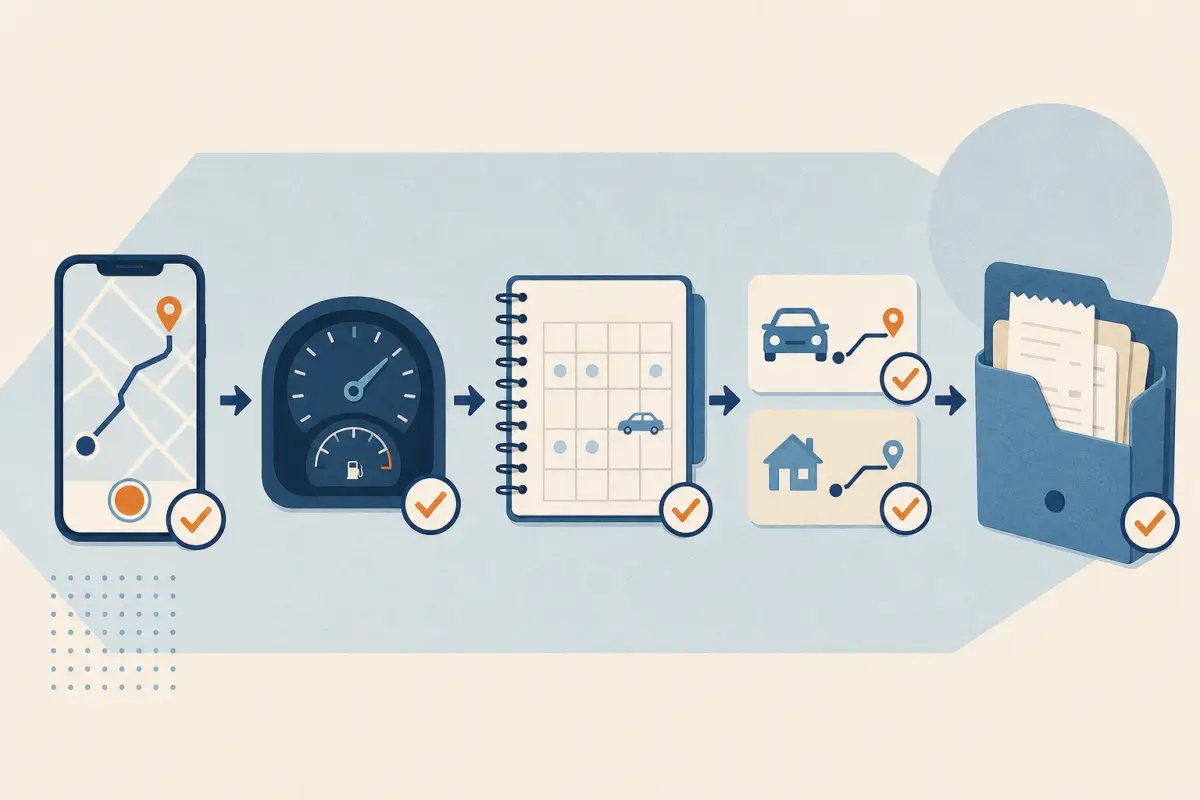
DriveLog creates a trip history while you drive, lets you classify business and private travel, and keeps trip-purpose notes together. That means you can total eligible work kilometres for the cents method and maintain the trip detail needed to assess a representative logbook period.
The app does not choose your tax treatment for you. It reduces the record-keeping gap so you or your registered tax agent can compare the methods using a more complete set of trips.
Common Comparison Mistakes
- Using the wrong income-year rate. The 91c rate applies from 1 July 2026; 2025-26 uses 88c.
- Claiming more than 5,000 km under cents per kilometre. The cap applies per car, even if eligible work travel is higher.
- Adding actual costs to the cents result. The per-kilometre rate already covers car expenses.
- Treating commuting as work travel. Ordinary home-to-work travel is generally private, with limited exceptions.
- Using total costs without excluding private use. The logbook method applies the supportable business-use percentage.
- Comparing deductions with tax refunds. A deduction reduces taxable income; it is not a dollar-for-dollar refund.
- Keeping a logbook that no longer represents your pattern. Material changes can require a fresh 12-week period.
Official Sources
The rate, method, and record-keeping claims in this guide were checked on 19 July 2026 against:
- ATO Cents per Kilometre Deduction Rate for Car Expenses
- ATO expenses for a car you own or lease
- ATO logbook method
- ATO records you need to keep
Frequently Asked Questions
Is the logbook method always better after 5,000 km?
No. Cents per kilometre stops at 5,000 km, but logbook only produces a higher result when eligible actual car expenses multiplied by the business-use percentage exceeds the cents result.
Can I choose a different method next year?
Yes. You can choose the method that gives the correct result for your circumstances each income year, provided you meet that method’s record requirements.
Do I need fuel receipts for cents per kilometre?
You generally do not claim individual fuel bills under cents per kilometre because the rate incorporates running costs. You still need records supporting the eligible work kilometres claimed.
Can I use both methods for the same car?
You can calculate both to compare them, but your claim for the same car and income year must use one method without double-counting expenses.
Final Decision Checklist
Before lodging, confirm the income year and rate, calculate the capped cents result, calculate the supportable logbook result, and check that your records meet the method you choose. If eligibility or expense treatment is unclear, use the ATO guidance or speak with a registered tax agent.