Product
ATO Cents Per Km Rate 2026-27: Official 91c/km Rate
10 May 2026 • 9 min read
Status checked July 8, 2026: the ATO has published the Cents per Kilometre Deduction Rate for Car Expenses 2026 Determination. The official 2026-27 cents per kilometre rate is 91 cents per kilometre from July 1, 2026. The Federal Register of Legislation lists the instrument as in force under F2026L00785.
Quick Answer: ATO Cents Per Km Rate 2026-27
The official ATO cents per kilometre rate 2026-27 is 91c per km.
That is a confirmed increase from the 88c per km rate that applies for 2024-25 and 2025-26. The new rate applies for the income year starting July 1, 2026 and stays in place until a new determination is made.
Key numbers:
- Official ATO cents per kilometre rate for 2026-27: 91c per km
- 2024-25 and 2025-26 rate: 88c per km
- Maximum cents per kilometre claim at 91c/km: $4,550 for 5,000 work-related km
- Maximum at 88c/km: $4,400 for 5,000 work-related km
- Difference at the 5,000 km cap: $150 per car
If you are lodging a 2025-26 return, the ATO return instructions still use 88c/km. If you are tracking trips for 2026-27, use 91c/km for cents per kilometre estimates. For the method rules, read our ATO cents per kilometre guide or use the ATO mileage calculator. If your work driving is high, compare this method with the ATO logbook method.
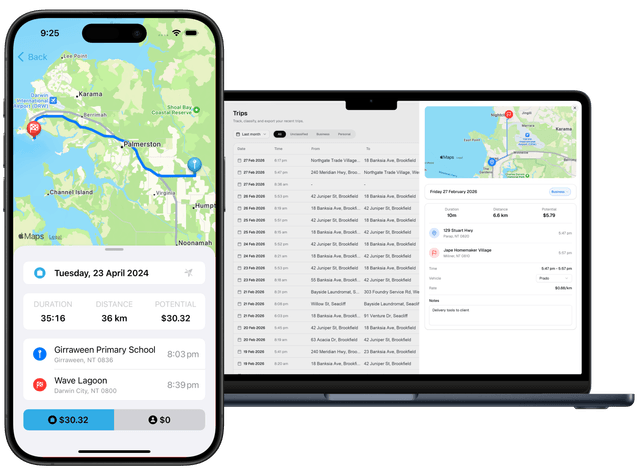
Start tracking your work kilometres with DriveLog so your records are ready before the 2026-27 year begins.
Which Rate Applies: 2025-26 vs 2026-27?
The key date is the start of the income year.
| Income year | Rate | Maximum at 5,000 km | Use this for |
|---|---|---|---|
| 2024-25 | 88c/km | $4,400 | 2025 tax return claims |
| 2025-26 | 88c/km | $4,400 | 2026 tax return claims |
| 2026-27 | 91c/km | $4,550 | Trips from July 1, 2026 |
If you are working on a 2026 tax return for the year ended June 30, 2026, do not use 91c/km for that return. The 91c/km rate starts from July 1, 2026 for the 2026-27 income year.
What the Official ATO Determination Says
The final instrument is titled Income Tax Assessment (Cents per Kilometre Deduction Rate for Car Expenses) Determination 2026.
It says the rate of cents per kilometre for cars for the income year commencing on July 1, 2026 is 91 cents per kilometre.
The ATO’s rates and thresholds statement says the 91c rate is made up of:
- a base cents per kilometre rate of 89c
- a temporary one-off uplift of 2c for the 2026-27 income year
For future income years, the ATO says annual indexation will apply to the 2026-27 base rate of 89c, not to the temporary 91c uplifted rate.
Is the 91c/km Rate Final?
Yes. The 91c/km rate is now official for the 2026-27 income year.
The earlier draft instrument, LI 2026/D12, has been replaced by the final determination. The ATO Legal Database lists LI 2026/19, and the Federal Register of Legislation lists F2026L00785 as in force. The rate applies until a new determination is made.
88c vs 91c: Example Calculations
Here is what the official increase means in real numbers.
| Work-related km | At 88c/km | At 91c/km | Difference |
|---|---|---|---|
| 1,000 km | $880 | $910 | $30 |
| 3,000 km | $2,640 | $2,730 | $90 |
| 5,000 km | $4,400 | $4,550 | $150 |

The headline rate matters, but the bigger issue is still record quality. A 91c rate does not help if you cannot show how you worked out your work-related kilometres.
Why the Official Rate Increased to 91c/km
The ATO’s 2026 rates and thresholds statement says the base 2026-27 rate is 89c/km, with a temporary one-off uplift of 2c/km for the 2026-27 income year.
That makes the final 2026-27 rate 91c/km.
That matters because the cents per kilometre method is designed to be a simplified allowance for car running costs. Fuel, registration, servicing, maintenance, and other operating costs are already built into the rate. You do not claim those costs separately when using cents per kilometre.
How the 2026 Fuel Shock Fits In
The fuel shock is useful context, but it should not be treated as the only reason for the rate change.
In April 2026, the Australian Government announced temporary fuel relief. The Department of Infrastructure said the fuel excise paid per litre was reduced from 52.6c to 20.6c from April 1 for three months, with fuel expected to be about 32c per litre plus GST cheaper at the bowser. The heavy vehicle road user charge was also reduced to zero for the same three-month period.
The ACCC also warned fuel retailers to pass on excise cuts quickly and said it was monitoring fuel prices daily across capital cities and more than 190 regional locations. Its April 2, 2026 release noted volatile benchmark prices and concerns about fuel surcharges.
The final ATO statement confirms the 2c/km temporary uplift. The fuel shock helps explain why operating costs were under pressure, but the number to use for 2026-27 is now the official 91c/km rate.
Records You Still Need for Cents Per Kilometre
Under the ATO’s cents per kilometre method, you do not need to keep every fuel receipt for the cents per kilometre calculation itself. The rate already accounts for car running costs.
You do still need a record that shows how you worked out your work-related kilometres.
A practical record should include:
- date of the trip
- start and end points or route context
- purpose of the trip
- kilometres travelled
- whether the trip was work-related or private
This is where many claims become weak. The issue is usually not the arithmetic. It is the ability to explain the work-related kilometres months later.
Cents Per Kilometre vs Logbook Method in 2026-27
With the official 91c/km rate, the cents per kilometre method becomes more valuable for 2026-27. But the 5,000 km cap per car still matters.
The cents per kilometre method is usually attractive when:
- you want a simpler claim
- your work-related driving is below 5,000 km per car
- you do not want to track every car expense
- your records can support a reasonable work-kilometre estimate
The logbook method may be worth considering when:
- you drive well above 5,000 work-related km
- fuel, servicing, finance, insurance, or depreciation costs are high
- your business-use percentage is strong
- you are willing to keep a representative logbook and expense records
For high-use drivers, the difference between cents per kilometre and logbook can still be larger than the 3c/km rate increase. For a deeper setup guide, see our ATO logbook method guide.
How DriveLog Helps With a 2026-27 ATO Mileage Claim
Whether you are claiming at the 2025-26 rate of 88c/km or tracking for the official 2026-27 rate of 91c/km, the rate only matters if your work kilometres are defensible.
DriveLog helps Australian drivers keep cleaner records by:
- capturing work trips as they happen
- separating business and personal kilometres
- keeping dates, distances, and trip purpose notes in one place
- reducing the need to rebuild records from memory at tax time
- making it easier to compare cents per kilometre with the logbook method
For the cents per kilometre method, you do not need fuel receipts for every trip, but you do need to show how you worked out your work-related kilometres. A simple, consistent trip record is the safer habit.
If fuel costs keep moving around in 2026, DriveLog also helps you see when the logbook method may be worth considering instead of the capped cents per kilometre method.
Track your work kilometres with DriveLog
Sources Checked
Core sources checked on July 8, 2026:
- ATO Cents per Kilometre Deduction Rate for Car Expenses 2026 Determination
- ATO Legal Database LI 2026/19
- Federal Register of Legislation F2026L00785
- ATO cents per kilometre method
- ATO D1 work-related car expenses 2026
- Department of Infrastructure fuel excise and heavy vehicle road user charge relief
- ACCC fuel excise cut and fuel-price monitoring release
FAQ: ATO Mileage Rate 2026-27
Has the ATO announced the 2026-27 mileage rate?
Yes. The ATO has published the official 2026-27 cents per kilometre rate of 91c/km in the Cents per Kilometre Deduction Rate for Car Expenses 2026 Determination.
What is the official ATO cents per km rate for 2026-27?
The official rate is 91 cents per kilometre for the income year commencing on July 1, 2026.
Is the 91c/km ATO rate final?
Yes. The ATO Legal Database lists LI 2026/19, and the Federal Register of Legislation lists F2026L00785 as in force.
Why is the official rate 91c/km?
The ATO says the 91c rate is a base rate of 89c plus a temporary one-off uplift of 2c for the 2026-27 income year.
What is the maximum cents per kilometre claim at 91c/km?
At 91c/km, the maximum cents per kilometre claim for 5,000 work-related kilometres is $4,550 per car.
Do I still need records if I use cents per kilometre?
Yes. You do not need fuel receipts for every trip under the cents per kilometre calculation, but you need records showing how you worked out your work-related kilometres.
Should high-mileage drivers use the logbook method instead?
Possibly. If you drive more than 5,000 work-related km or your actual car costs are high, the logbook method may produce a better result, provided you keep the required records.