Page
ATO Cents Per Kilometre Rate: 2024-25 & 2025-26
17 June 2024 • 6 min read
Quick answer: 88 cents per kilometre
The ATO cents per kilometre rate was 88 cents per eligible work-related kilometre for both the 2024-25 and 2025-26 income years. The rate applies when an eligible taxpayer chooses the cents per kilometre method for a qualifying car.
Looking for the current figure? The rate changed for the next income year, so use the separate ATO cents per kilometre rate for 2026-27 instead. This page remains the historical owner for 2024-25 and 2025-26 searches.
| Income year | Cents per kilometre rate | Which guide to use |
|---|---|---|
| 2024-25 | 88 cents | This historical guide |
| 2025-26 | 88 cents | This historical guide |
| 2026-27 | 91 cents | Current 2026-27 rate guide |
The historical 88-cent figure and the method rules are supported by the ATO’s car-expense guidance. Always match the rate to the income year in which the work-related travel occurred.
Calculate a 2024-25 or 2025-26 amount
Multiply your eligible work-related kilometres by $0.88:
eligible work-related kilometres × $0.88 = calculated amount
For example, 1,000 eligible kilometres × $0.88 gives $880. If your records show 3,250 eligible kilometres, the calculation is 3,250 × $0.88 = $2,860.
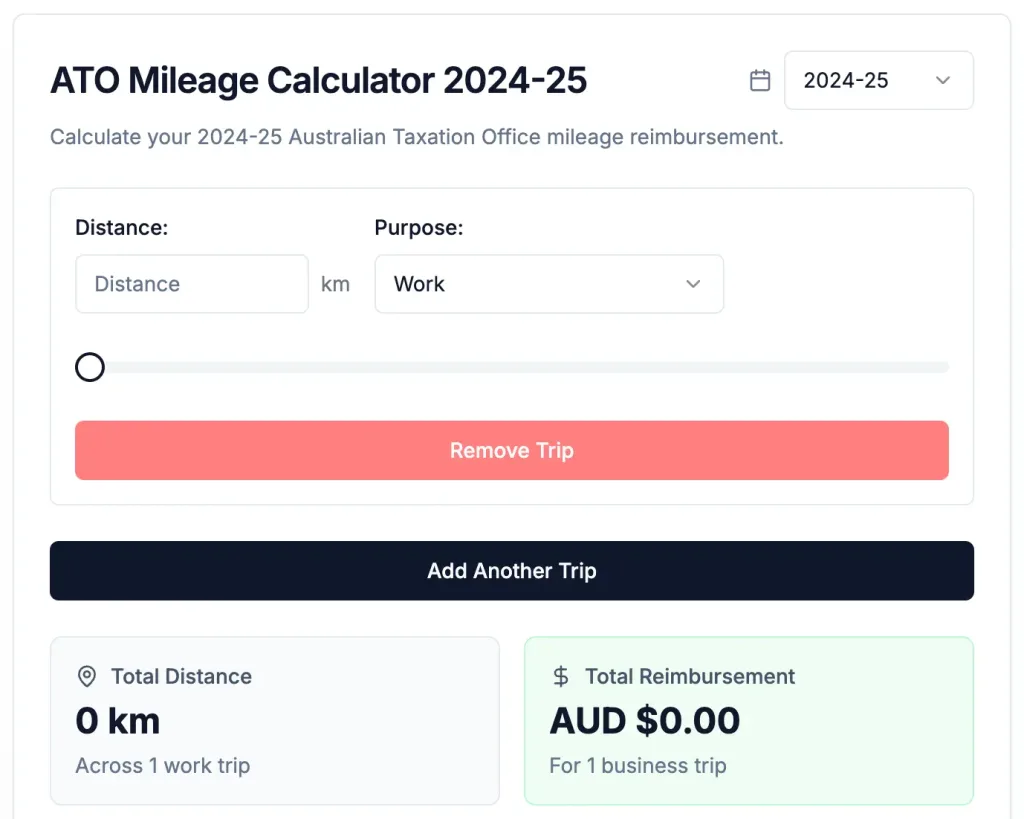
You can check the arithmetic with the ATO cents per kilometre calculator. The calculation is only the final step: you still need to decide which trips are eligible and retain records that support the distance and work purpose.
What the cents per kilometre method covers
The cents per kilometre method uses one set rate to calculate eligible car expenses. You do not separately add fuel, registration, insurance, servicing or depreciation to the result. Those running costs are represented by the set rate.
For an eligible claim, the ATO limits the method to 5,000 work-related kilometres per car for the income year. The cap is a limit on the calculation method, not permission to estimate a round 5,000 kilometres without evidence.
This page does not decide whether a particular journey is work-related. Ordinary travel between home and a regular workplace is often private, while other trips can depend on their purpose and circumstances. Check the ATO guidance that applies to you or speak with a registered tax professional when the classification is unclear.
Records to keep for the 88-cent rate
The cents per kilometre method does not require a 12-week logbook. It does require records that show how you worked out the eligible kilometres. Useful evidence can include:
- trip dates and destinations;
- the work purpose of each journey;
- distance records from an odometer, map or mileage app;
- diary, appointment or job records that support the travel; and
- a calculation showing the income-year rate used.
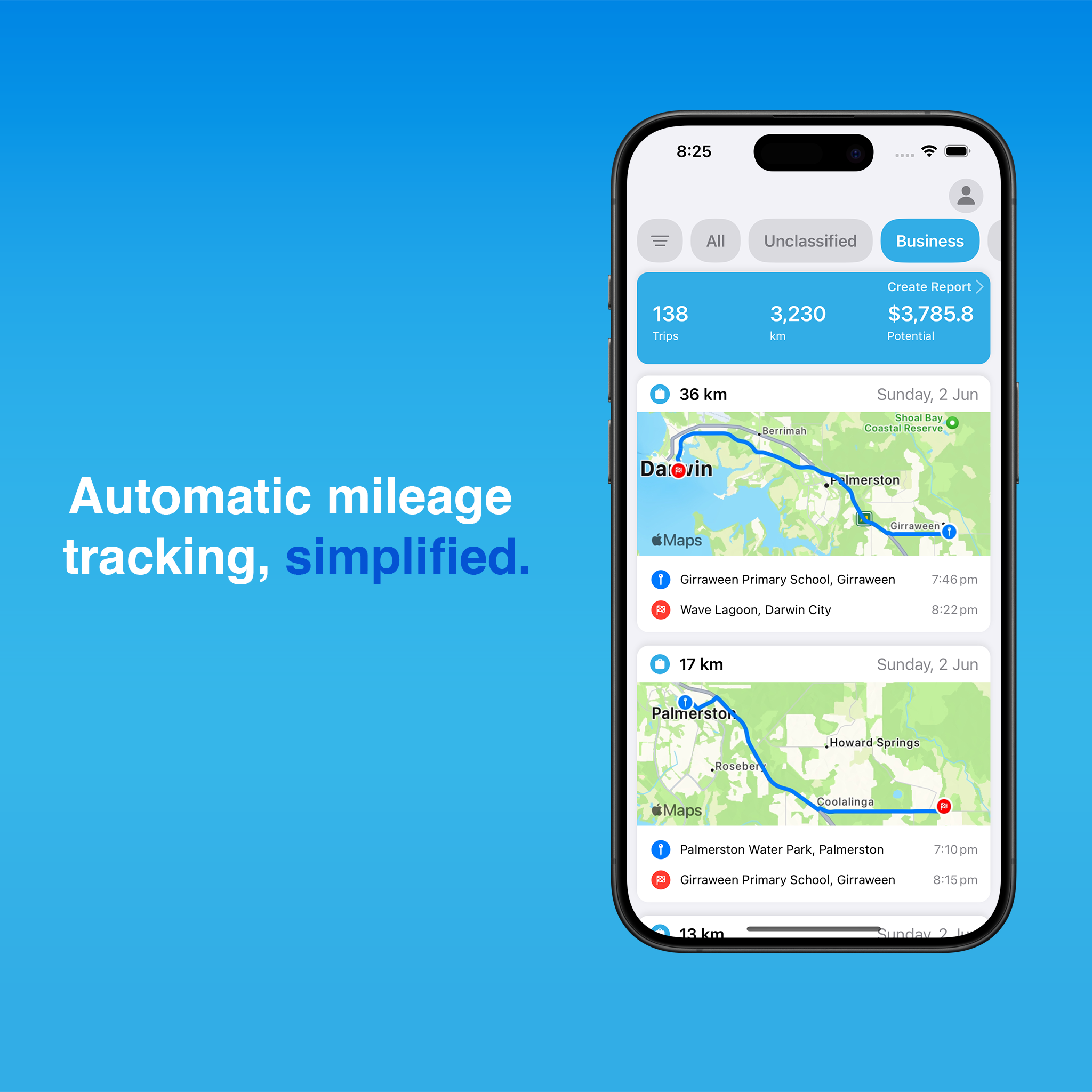
Keep the record while the purpose is still easy to recall. A short note such as “client equipment check—Palmerston” is more useful than a generic label such as “work”. If you use automatic trip capture, review missed trips and business/private classifications regularly rather than waiting until tax time.
For a capture-and-review workflow, see the vehicle log book app guide for Australia. If you are instead using the logbook method to claim a business-use percentage of actual car expenses, follow the separate ATO logbook method guide.
Why 2024-25 and 2025-26 share this page
The 88-cent rate applied in both income years. Keeping the two historical years together gives searchers one clear answer without creating two pages that compete for the same rate and method intent.
The year boundary still matters for your records. Group trips by the correct income year and use the rate applying to that period. Do not apply the 2026-27 rate retrospectively to travel from 2024-25 or 2025-26.
Cents per kilometre or logbook method?
The two ATO methods solve different recordkeeping and calculation jobs:
- Cents per kilometre: applies a set rate to eligible work-related kilometres, subject to the method’s annual kilometre limit.
- Logbook method: uses a valid business-use percentage and eligible actual car expenses, supported by the required records.
The simpler method is not automatically the larger or more appropriate result. Compare the evidence you have, the distance travelled and the costs you can substantiate. The cents per kilometre vs logbook comparison explains the decision boundary without changing this page’s historical-rate focus.
Track historical-year kilometres with DriveLog
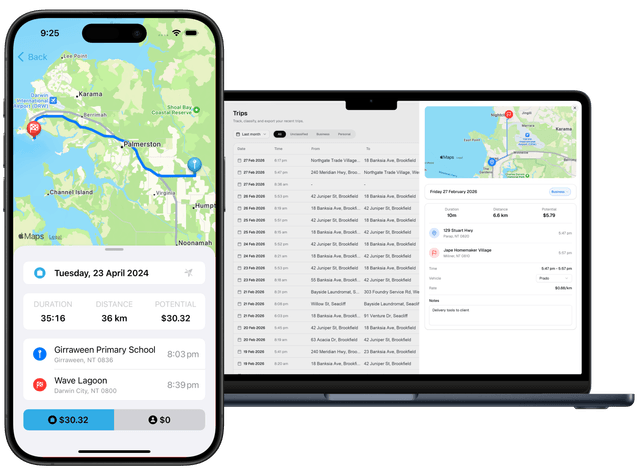
DriveLog can help build a trip history, but automatic capture is a draft rather than a tax decision. Review trip purpose, correct missed journeys and keep a stable export with the rest of your records.
Frequently asked questions
Was the ATO rate 88 cents in 2024-25?
Yes. The cents per kilometre rate was 88 cents for the 2024-25 income year.
What was the cents per kilometre rate for 2025-26?
It was also 88 cents per eligible work-related kilometre for 2025-26.
Do I need a logbook for the cents per kilometre method?
No 12-week logbook is required for this method, but you need records showing how you calculated the eligible work-related kilometres. A 12-week representative logbook belongs to the separate logbook method.
Can I use the 88-cent rate for 2026-27 travel?
No. Use the rate applying to the income year in which the travel occurred. See the 2026-27 ATO rate guide for that year.