Product
Work-Related Travel Expenses: What Australian Employees Record
3 September 2026 • 10 min read
Quick Answer: Which Costs Belong in Work-Related Travel Expenses?
For an Australian employee, work related travel expenses can include costs you incur while performing your job that do not belong in the separate work-related car expense category. Vehicle ownership and vehicle type are the quickest routing clues.
If you own or lease the passenger car, most operating costs for its work use belong with work-related car expenses. Travel expenses can instead cover work use of someone else’s car, a motorcycle or a vehicle that is not treated as a car, along with items such as work-related parking, tolls, short-term car hire, taxis, ride-share and public transport. Overnight work travel can also fall in this category, but it has its own detailed rules.
Three fundamentals still apply: you incurred the cost yourself, it was directly connected with performing your work, and you have records. You cannot claim a private portion or an amount your employer reimbursed. Ordinary travel between home and a regular workplace is generally private, subject to limited fact-specific exceptions.
This guide helps you route and record a vehicle-related travel cost. It does not decide that every recorded cost is deductible or replace advice for unusual circumstances.
Use DriveLog to capture trip purpose while the journey is fresh
Travel-Expense Routing Table
Start with the cost, then ask who owns the vehicle and what kind of vehicle it is.
| Cost or journey | Likely record category | What to preserve |
|---|---|---|
| Work use of a passenger car you own or lease | Work-related car expenses | Trip purpose, kilometres, vehicle identity and the records required by your chosen method |
| Petrol or repairs you paid for while using someone else’s car for work | Work-related travel expenses | Receipt, who owned the car, work purpose, route and private portion |
| Work trip by motorcycle | Work-related travel expenses | Actual cost records, trip purpose, route and work-use calculation |
| Work use of a vehicle that is not treated as a car, such as some heavy utilities or minibuses | Work-related travel expenses | Vehicle specifications, actual costs, trip records and work-use basis |
| Parking or road and bridge tolls during eligible work travel | Work-related travel expenses | Receipt or statement, location, date and the related work appointment |
| Taxi, ride-share, train, bus or airfare for work | Work-related travel expenses | Receipt, itinerary and specific work reason |
| Short-term vehicle hire for a work trip | Work-related travel expenses | Hire agreement, invoice, work itinerary and private-use split |
| Normal trip from home to a regular workplace | Generally private | Do not route it as work travel merely because work happens at the destination |
| Cost fully reimbursed by an employer | Not your deduction for that same cost | Expense claim, reimbursement amount and payment record |
The table is a routing aid, not a final eligibility ruling. A journey must still be work-related on its facts. If the vehicle is your own or leased car, use the dedicated Australian employee car-expense guide for trip classification and record-first guidance.
Vehicle Types and Ownership Change the Category
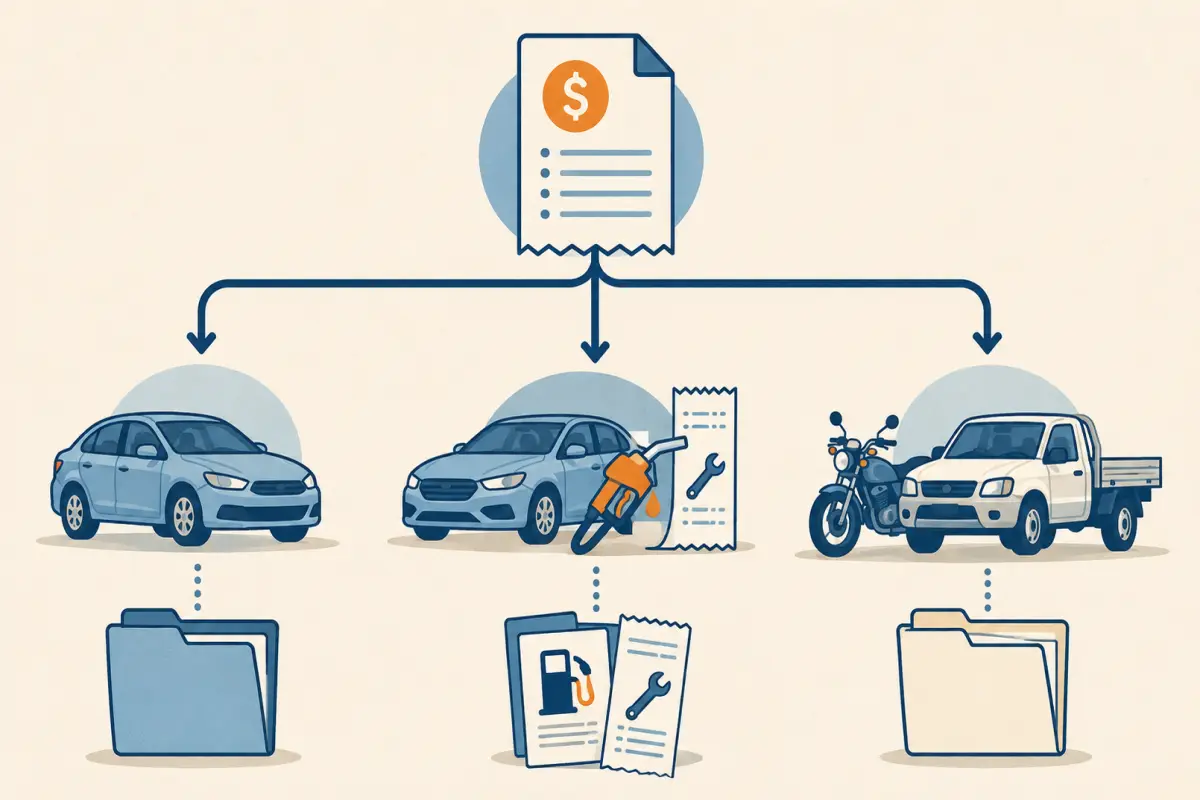
The everyday word “vehicle” is broader than the tax category “car”. That distinction can change where you record the expense and how you support it.
A car you own or lease
When you use a passenger car that you own or lease, its work-related operating costs generally belong in the work-related car expense category. Keep this page as a signpost rather than trying to calculate the claim here. The ATO method comparison explains the separate calculation choices once you have identified the relevant work trips.
Someone else’s car
If you pay actual costs to use a car that another person owns or leases for work, the ATO places those costs with vehicle-related travel expenses rather than your own-car expenses. The record should show more than a fuel receipt. Note whose vehicle it was, why you used it, which work journey the cost supported and whether any private travel was included.
A motorcycle, heavy utility or passenger vehicle
Motorcycles and vehicles outside the ATO definition of a car use actual-expense records. Examples can include a vehicle designed to carry one tonne or more, or nine or more passengers. Do not classify a vehicle from its nickname or appearance. Preserve specifications such as carrying capacity and seating where the category matters, then check the current ATO guidance.
An employer-provided vehicle
If your employer provides a vehicle for your or your relatives’ exclusive use and allows private use, the ATO says you cannot claim its running costs, even when a particular use relates to work. Work-related parking, bridge and road tolls may be treated differently, excluding parking at or travel to a normal workplace. Keep the employer arrangement and each separate out-of-pocket cost visible.
Parking, Tolls, Short-Term Hire and Other Transport
Travel costs do not need to involve your own car. A client visit might combine a train fare, ride-share, airport parking and a hire vehicle. Record each cost against the part of the itinerary it supported.
For parking and tolls, save the receipt or account statement and attach a short explanation: “toll—office to client inspection” is more useful than “road cost”. Parking at a regular workplace is generally private, so the location and journey purpose matter.
For short-term hire, retain the agreement and final invoice, not only the booking confirmation. If the vehicle was used privately as well as for work, record the work and private portions. The same principle applies to public transport and air travel: an itinerary shows movement, while an appointment, agenda or job record explains the work connection.
Overnight accommodation, meals and incidentals can also be travel expenses when the employee stays away from home while performing work duties. Those rules are detailed and fact-sensitive. This page deliberately does not reproduce allowance thresholds or an overnight substantiation guide; use current ATO material for that part of the claim.
Separate Private Portions and Reimbursed Costs
A mixed journey does not become wholly work-related because one stop was for work. Split the record at the point where the purpose changes.
For example, a ride-share from a client meeting to a private dinner contains a private destination even if the day began with work. A hired vehicle used for two work-site visits and a weekend trip needs a supportable allocation. Record the actual legs, dates and purposes rather than applying a broad “business day” label.
Reimbursement needs its own field. The basic deduction test requires that you spent the money and were not reimbursed. Keep the employer expense claim beside the receipt so a paid amount is not claimed again. An allowance can involve different tax facts from a reimbursement; preserve the payslip and policy rather than assuming the label settles the treatment. If you need to estimate an employer payment, use the separate employee mileage reimbursement calculator; do not mix that payment calculation into this travel-expense record.
Evidence Pack for a Mixed Travel Day
Build one compact pack for each day with multiple travel costs:
- Work itinerary: times, destinations and the duty performed at each stop.
- Transport record: vehicle, ownership, route and distance, or the ticket and booking details for other transport.
- Cost evidence: itemised receipts, invoices, toll statements and hire agreements.
- Purpose link: calendar entry, customer appointment, job sheet, conference agenda or another record connecting the travel to work.
- Private split: the private leg, day or proportion and how you calculated it.
- Employer payment: whether the cost was unreimbursed, partly reimbursed, fully reimbursed or associated with an allowance.
- Category note: why you treated it as travel rather than an expense for your own or leased car.
Review the pack while you can still fix a missing purpose or receipt. Keep source documents in their original form and use consistent filenames or tags so the route, cost and appointment stay connected.
Worked Route-and-Receipt Example
Sam is an employee attending a regional equipment inspection. He takes a taxi from home to the airport, flies to the regional centre, hires a car for the site visit and pays a road toll. After the inspection, he drives the hire car to a private dinner before returning it.
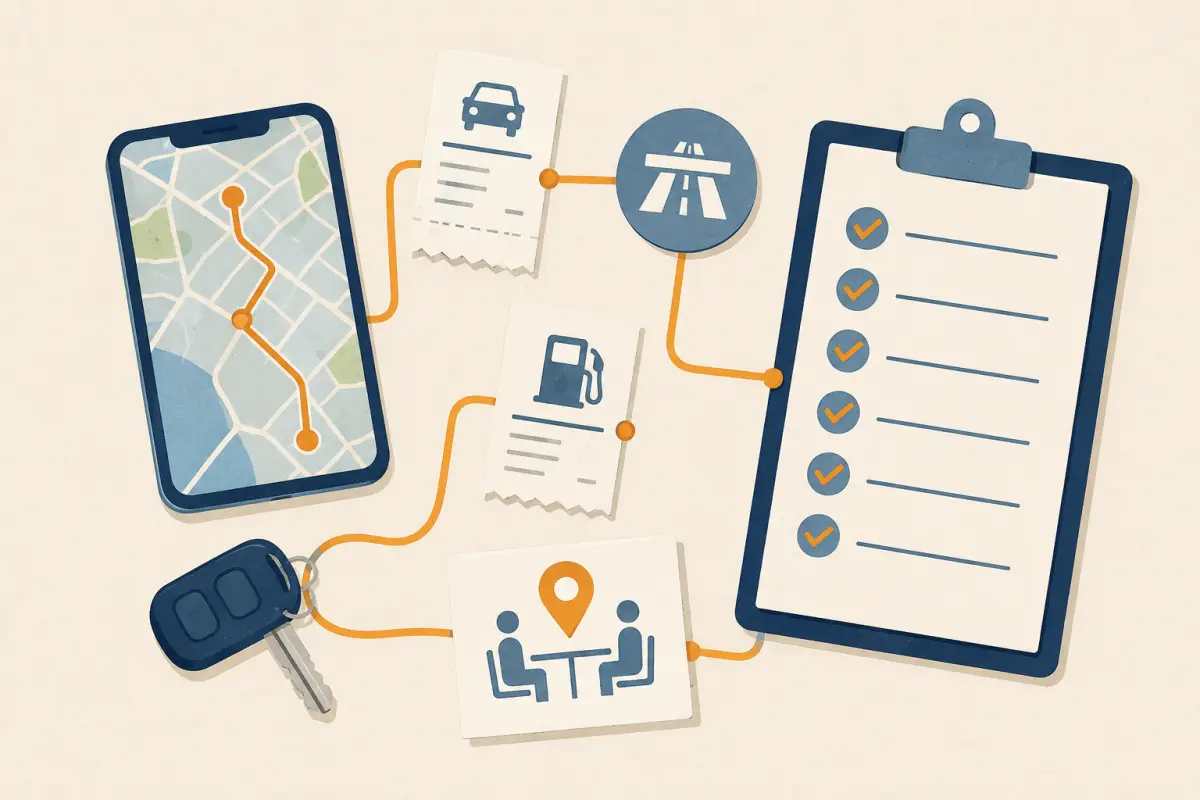
Sam’s evidence pack includes the inspection appointment, flight itinerary, taxi receipt, hire agreement, toll statement and the hire-car route. He records the private dinner leg separately. His employer reimburses the airfare but not the taxi, hire vehicle or toll.
The records make four decisions visible:
- the travel occurred to perform a specific work duty
- the hire vehicle was not Sam’s own or leased car
- the private dinner leg is separated
- the reimbursed airfare is not treated as Sam’s unreimbursed expense
The pack still does not guarantee a deduction. It gives Sam or his tax adviser the facts needed to apply the current rules without reconstructing the day months later.
Tax-Return Preparation Handoff
Before entering an amount, confirm that the current tax-return section matches the expense. A simple preparation list is:
- identify who owned or leased the vehicle
- confirm whether it was a car for ATO purposes
- separate own-car operating costs from other travel costs
- remove private portions and fully reimbursed amounts
- reconcile every amount to a receipt, statement or calculation
- check unusual home-to-work, overnight, employer-vehicle or allowance facts against current ATO guidance
- keep records for the required retention period
Category names and online tax-return screens can change. Use the current ATO instructions for the year you are lodging, and get registered tax-agent advice when ownership, vehicle classification or mixed-purpose travel is unclear.
Official ATO References
The material claims in this guide were checked on 4 September 2026 against these official sources:
- ATO work-related travel expenses section
- ATO vehicle expenses: ownership, vehicle type and records
- ATO Taxation Ruling TR 2021/1 on employee transport expenses
Official guidance can change, and the result depends on your circumstances. This article is general information, not personal tax advice.
Common Questions
Are work-related travel expenses the same as car expenses?
No. Costs for a car you own or lease generally use the work-related car expense category. Travel expenses can include work costs for other vehicle arrangements and transport types, plus items such as eligible parking and tolls. Ownership, vehicle type and the cost itself determine the route.
Can I claim petrol for a car owned by someone else?
The ATO includes actual vehicle costs you incur for work travel in a car someone else owns or leases. Keep the receipt, ownership context, work purpose, route and any private portion. You must also have paid the cost yourself without reimbursement.
Can I claim parking at my normal workplace?
Parking at a normal or regular workplace is generally private. Parking during eligible travel to perform work may be different, so record the location and the work journey it supported.
Does a travel allowance automatically make an expense deductible?
No. Receiving an allowance does not by itself create a deduction. Keep the payment record and the evidence for the expense, then apply the current allowance and deduction rules to your facts.
How can a mileage app help with travel expenses?
An app can preserve dates, routes and trip purposes for vehicle journeys. It cannot prove that a cost is deductible or replace receipts, vehicle-ownership evidence, employer payment records or the ATO rules.
Keep the Journey and the Cost Connected
The strongest travel record explains what happened: where you went, why the trip formed part of your work, which vehicle or transport you used, what you paid, what was private and what your employer covered. Capture those facts as the day unfolds, then route the cost to the right category during tax preparation.
Download DriveLog to keep work-trip purpose and routes organised