Product
Australia Fuel Crisis 2026: What Relief Exists and Who Needs to Track Fuel or KM Records
April 7, 2026 • 10 min read
Quick Answer: Do You Need to Track Anything?
Australia is dealing with a real fuel-price shock in April 2026, and there is government relief in place.
As checked on April 7, 2026:
- the federal fuel excise cut that began on April 1, 2026 is designed to reduce pump prices automatically
- the heavy vehicle road user charge was also cut to zero for 3 months
- the ACCC is monitoring petrol and fuel markets while relief is rolling through
For most drivers, that means the help shows up at the bowser. You do not need to keep kilometre logs just to access the excise cut.
You only need to track fuel or kilometres if you are in one of the groups that may still need evidence later, such as:
- employees claiming work-related car expenses
- sole traders using cents per kilometre or the logbook method
- eligible businesses claiming Fuel Tax Credits
- heavy vehicle operators who need clean records while the road user charge settings have changed
So the short answer is:
- ordinary private motorists: usually no special tracking needed for the relief itself
- drivers with work kilometres: you may still need km records
- businesses and some operators: you may need both fuel and usage records
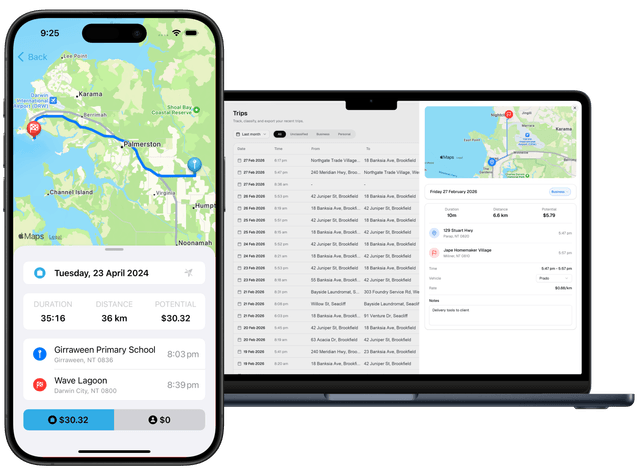
Track work trips and export clean records with DriveLog
What Happened in April 2026
The fuel story is not just another routine price cycle.
On April 2, 2026, the Department of Infrastructure published a fact sheet confirming that:
- fuel excise was reduced from 52.6 cents to 20.6 cents per litre
- the change applied from April 1, 2026
- the relief is set to run for 3 months
- fuel was expected to be about 32 cents per litre, plus GST, cheaper
- the heavy vehicle road user charge was reduced from 32.4 cents per litre to zero for the same 3-month period
At the same time, the ACCC has continued updating its petrol and fuel guidance and monitoring whether relief is flowing through the market.
That is why a lot of drivers are calling this a fuel crisis rather than a normal fuel-price story. The question is no longer just “Why is petrol expensive?” It is “What help exists right now, and do I need records for any part of it?”
What Relief Exists Right Now
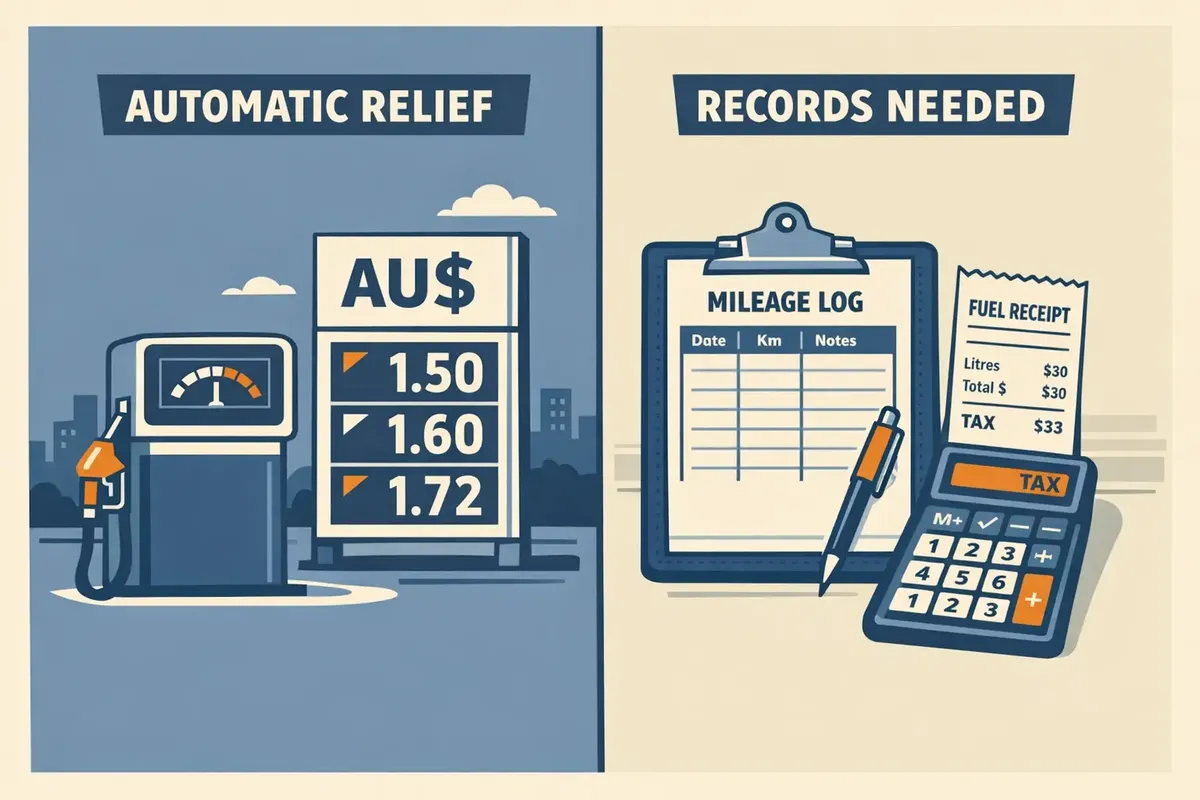
There are 2 very different categories of help.
1. Automatic price-side relief
This is the broadest help and the one most drivers care about first.
- you do not lodge a claim to get the excise cut
- you do not need a mileage log to unlock it
- the benefit should appear in lower fuel prices if it is passed through properly
This is the part that applies to most Australians.
2. Claim-based tax or business relief
This is where records matter.
It includes things like:
- ATO work-related car expenses
- logbook method claims
- Fuel Tax Credits
- heavy vehicle business calculations that need correct period-based support
This is not automatic price relief. This is the part where records can still make or break the value you recover.
Who Does Not Need to Track Fuel or KM Records Just for Relief
Most ordinary motorists fall into this bucket.
If you are:
- filling up a personal car
- not claiming work-related car expenses
- not running a business claim through BAS
- not operating in a Fuel Tax Credit context
then you generally do not need to start tracking kilometres or fuel receipts just because fuel relief exists.
That is the main misconception to avoid.
The current relief is mostly designed to lower the price you pay, not create a universal new reimbursement scheme.
Who Still Needs Records
This is where DriveLog actually becomes relevant.
Employees and contractors claiming work-related car expenses
If you are driving for work, the fuel crisis does not replace the ATO rules.
You still need to know:
- whether the travel is genuinely work-related
- whether you are using cents per kilometre or the logbook method
- what evidence that method needs
If you use cents per kilometre, the ATO rate for 2024-25 and 2025-26 is 88 cents per kilometre. That method already bundles fuel and other running costs, so the focus is on your work kilometres, not on separately claiming petrol receipts.
If you use the logbook method, fuel matters more because you are claiming the business-use share of your actual costs. That means logbook, odometer, and fuel-expense records all matter.
For the detailed rules, see our ATO logbook method guide and our ATO cents per kilometre guide.
Sole traders with irregular or high driving costs
If the fuel crisis has pushed your actual operating costs up, it may be worth checking whether your current method still makes sense.
Some drivers stay on cents per kilometre because it is simple. Others may find that the logbook method becomes more attractive when:
- work driving volume is high
- total fuel and vehicle costs rise
- the business-use percentage is strong
The key point is that higher fuel costs do not create a new claim type. They just change the practical value of your existing method.
Eligible businesses claiming Fuel Tax Credits
This is the group most likely to need proper fuel and usage records.
Fuel Tax Credits are not just an employee mileage claim by another name. They are a separate business mechanism and can apply to eligible business fuel use, especially in heavier vehicle or operational contexts.
The records may include:
- tax invoices and purchase records
- business-use calculations
- route distances
- log books
- odometer readings
- GPS or telematics records
- BAS-period working
Business.gov.au and the ATO both make it clear that Fuel Tax Credits are about proving how fuel was used in the business, not just proving that fuel was purchased.
What Records Matter by Situation
The easiest way to think about this is by audience.
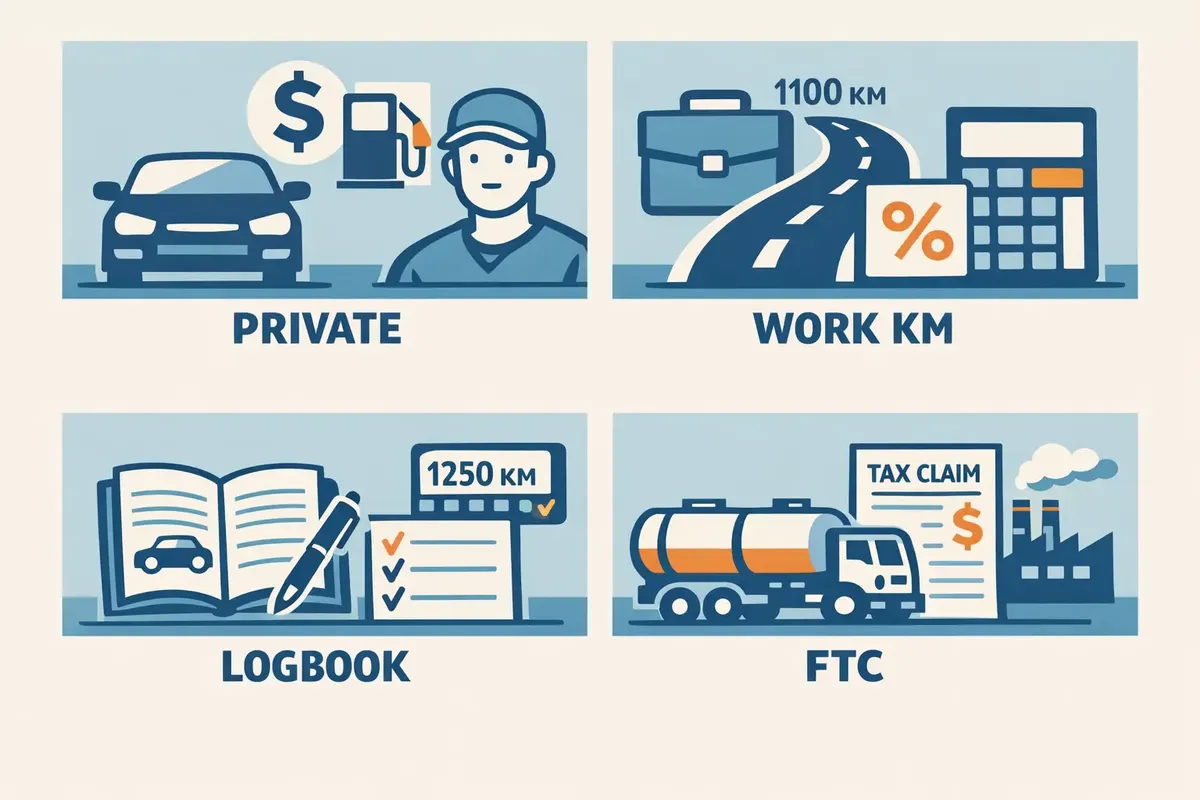
Private motorists
- usually no special crisis-related tracking needed
- relief is mainly automatic price relief
Work-km drivers using cents per kilometre
- keep trip dates
- keep business purpose
- keep destinations or route context
- keep a defensible kilometre total
Drivers using the logbook method
- maintain a 12-week representative logbook
- keep opening and closing odometer readings
- keep actual expense records, including fuel
- support your business-use percentage
Fuel Tax Credit claimants
- keep invoices
- keep records showing business use of fuel
- keep route, odometer, or telematics support where relevant
- keep BAS-period calculations that match the claim
The Practical Rule for 2026
The cleanest rule is this:
Do not start tracking kilometres because there is a fuel crisis. Start tracking only if your driving creates a work or business claim that needs evidence.
That is the difference between useful admin and wasted admin.
If you are a private motorist, focus on whether relief is showing up in the price you pay.
If you are a contractor, tradie, business owner, or employee who drives for work, focus on whether your records would still hold up if you had to justify the claim later.
Where DriveLog Fits
DriveLog helps in the part of the fuel crisis that actually becomes operational:
- capturing work kilometres as they happen
- separating personal and business trips
- keeping trip history organised before tax time
- giving you something cleaner than a reconstructed spreadsheet months later
It is not a fuel-price app and it is not a government rebate portal. It is useful when the crisis pushes you to take records more seriously because your work driving costs suddenly matter more.
Sources and Last-Checked Dates
The core guidance for this article was checked on April 7, 2026:
- Department of Infrastructure: fuel excise and heavy vehicle road user charge relief
- ACCC petrol and fuel information
- ATO myTax instructions: work-related car expenses
- ATO expenses for a car you own or lease
- Business.gov.au: claim fuel tax credits
- ATO fuel tax credit business records
FAQ: Australia Fuel Crisis 2026
Do I need to apply for the April 2026 fuel relief?
Usually no. The main excise relief is intended to reduce pump prices automatically rather than through a separate consumer application.
Do ordinary motorists need to track kilometres because of the fuel crisis?
Usually no. Private motorists generally do not need kilometre logs just to access price-side relief.
Who does need fuel or kilometre records right now?
Drivers claiming work-related car expenses, people using the logbook method, eligible Fuel Tax Credit claimants, and some heavy vehicle operators are the main groups that still need structured records.
Can I claim commuting fuel because petrol prices are high?
Usually no. Higher petrol prices do not turn normal home-to-work commuting into a deductible claim.
Final Takeaway
The fuel crisis matters, but not in the same way for everyone.
For most Australians, the real question is whether the excise relief is showing up in lower fuel prices.
For drivers with work use or business fuel use, the more important question is whether your records are ready if you need to support a claim later.
That is the line to remember:
- relief at the pump is mostly automatic
- relief on tax or BAS is still evidence-driven
If your driving is work-related, now is the right time to tighten your records before the pressure of tax time or BAS time hits.