Product
How to track your mileage on iPhone
July 1, 2024 • 3 min read
Last updated: February 17, 2026
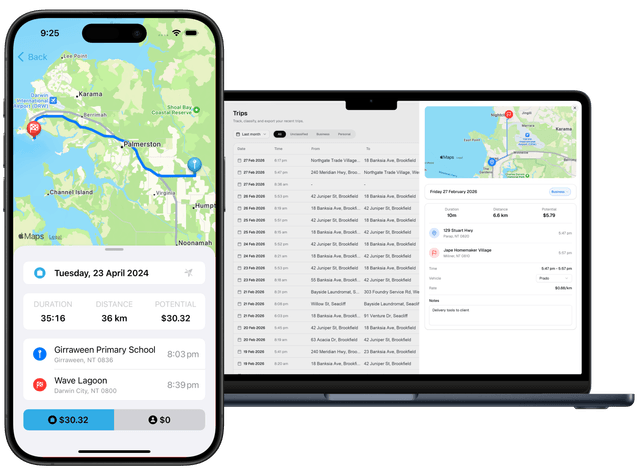
Quick answer: To track mileage on iPhone, use an automatic mileage tracker app, keep background trip detection enabled, classify each trip as business or personal, and export reports before filing taxes or submitting expenses.
If you want a native iOS workflow, DriveLog is built specifically for iPhone users and is designed for business mileage tracking, tax deductions, and reimbursement records.
How to track mileage on iPhone (step by step)
1. Download an iPhone mileage tracker app
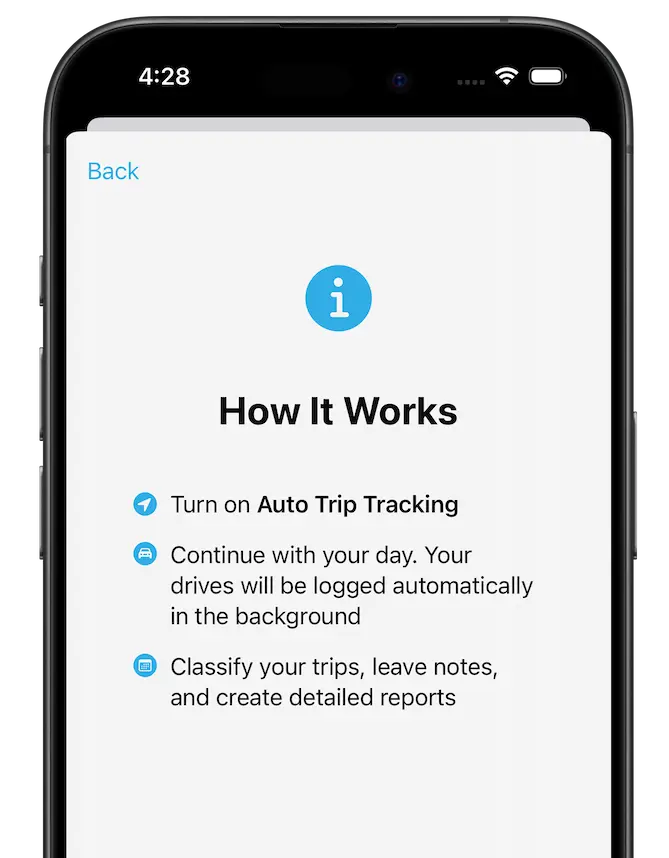
Install DriveLog from the App Store and complete the initial setup. If you drive for work, delivery, rideshare, or field service, automatic background tracking is usually the most reliable approach.
2. Turn on Auto Trip Tracking
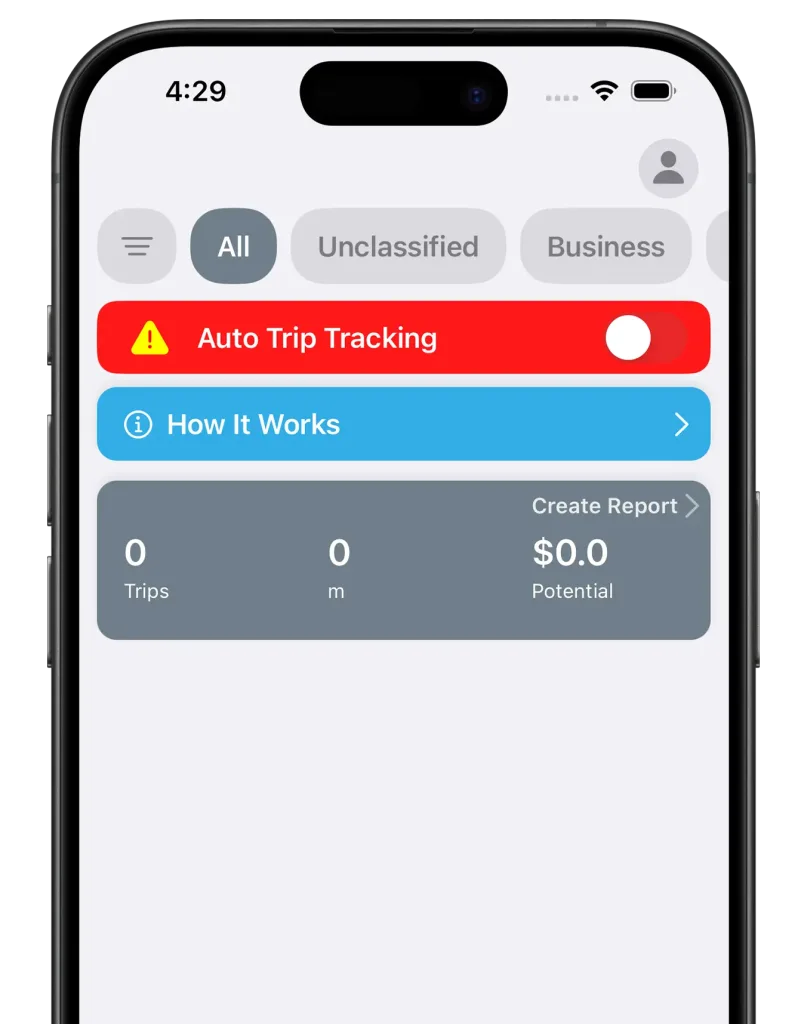
When Auto Trip Tracking is enabled, trips are recorded in the background while your iPhone is with you. That means fewer missed drives and less manual entry. You can pause tracking anytime (for example during vacation or time off).
3. Classify each trip (business or personal)
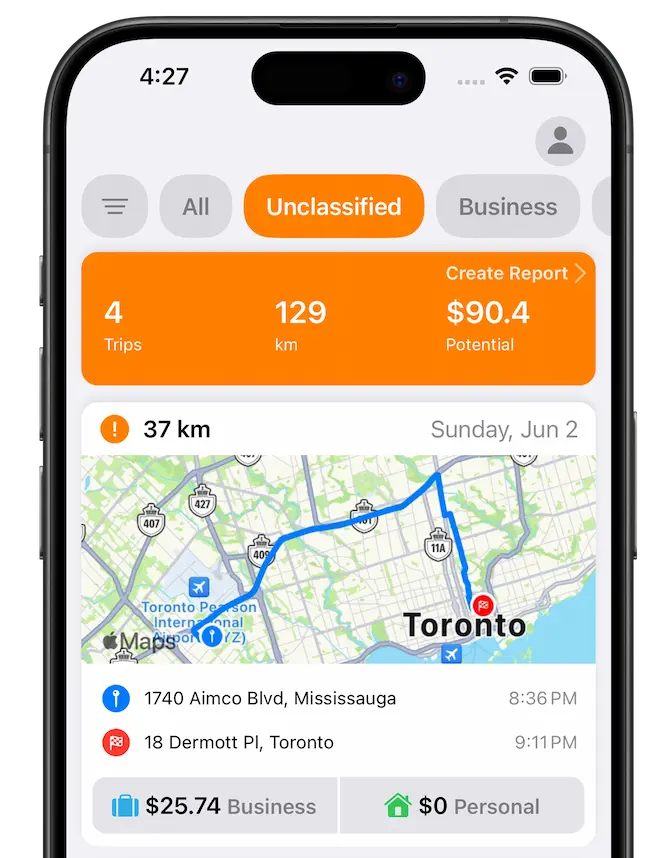
As trips come in, review and classify them with one tap. This keeps your log organized and makes reports useful when you need to separate deductible miles from personal driving.
4. Create and export mileage reports
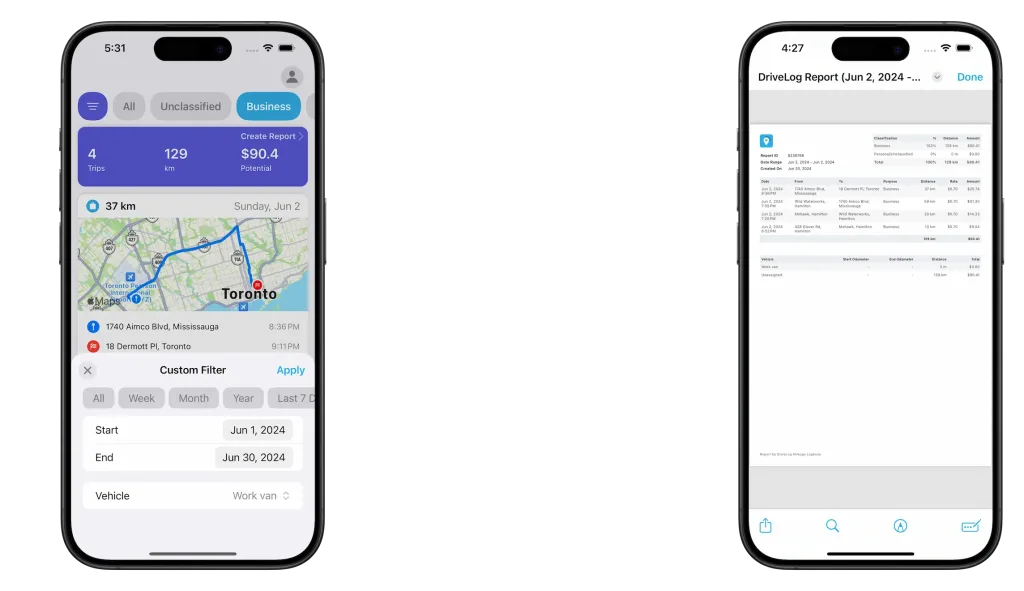
Filter by date range, vehicle, and trip type, then generate a report. This is useful for monthly bookkeeping and year-end filing.
Example: generate a report for April business trips taken with your work vehicle, then export for your accountant or employer.
What to look for in an iPhone mileage tracker app
If you are comparing apps, prioritize features that reduce missed trips and cleanup work:
- Automatic background trip detection
- Fast business/personal classification
- Clean, exportable mileage reports
- Support for multiple vehicles and filters
For rideshare workflows, this can pair well with guides like The Best Mileage Tracker for Uber.
Keep your mileage log tax-ready
Mileage records are typically strongest when each trip has date, distance, purpose, and category captured consistently. Tax rules can change, so verify rates and eligibility for your jurisdiction before filing.
For U.S. users, check the latest IRS mileage rate guidance. If you want automated categorization help, see our AI mileage tracker overview.
This article is informational only and is not tax or legal advice.
FAQ: mileage tracking on iPhone
What is the easiest way to track mileage on iPhone?
The easiest method is automatic trip tracking in a dedicated iPhone mileage app, followed by quick trip classification and periodic report exports.
Can I track mileage on iPhone without manually typing every trip?
Yes. Automatic trip detection can run in the background and capture drives for later review, so you do not need to enter each route manually.
Does iPhone have a built-in business mileage tracker?
iPhone can track movement data, but business mileage logs typically need trip classification, report exports, and audit-friendly records, which dedicated mileage tracker apps provide.
How often should I export mileage reports?
Monthly exports are a practical default, with an additional year-end review before filing taxes or submitting reimbursements.
Start tracking with DriveLog
Download DriveLog on the App Store to set up automatic mileage tracking on iPhone in minutes.