Product
HMRC Mileage Rate 2026/27: Official Rates and What Changed
18 February 2026 • 6 min read
Updated 2 October 2026: verified against HMRC’s current rates and the mileage-increase policy paper.
Quick Answer: HMRC Mileage Rate 2026/27 (Official)
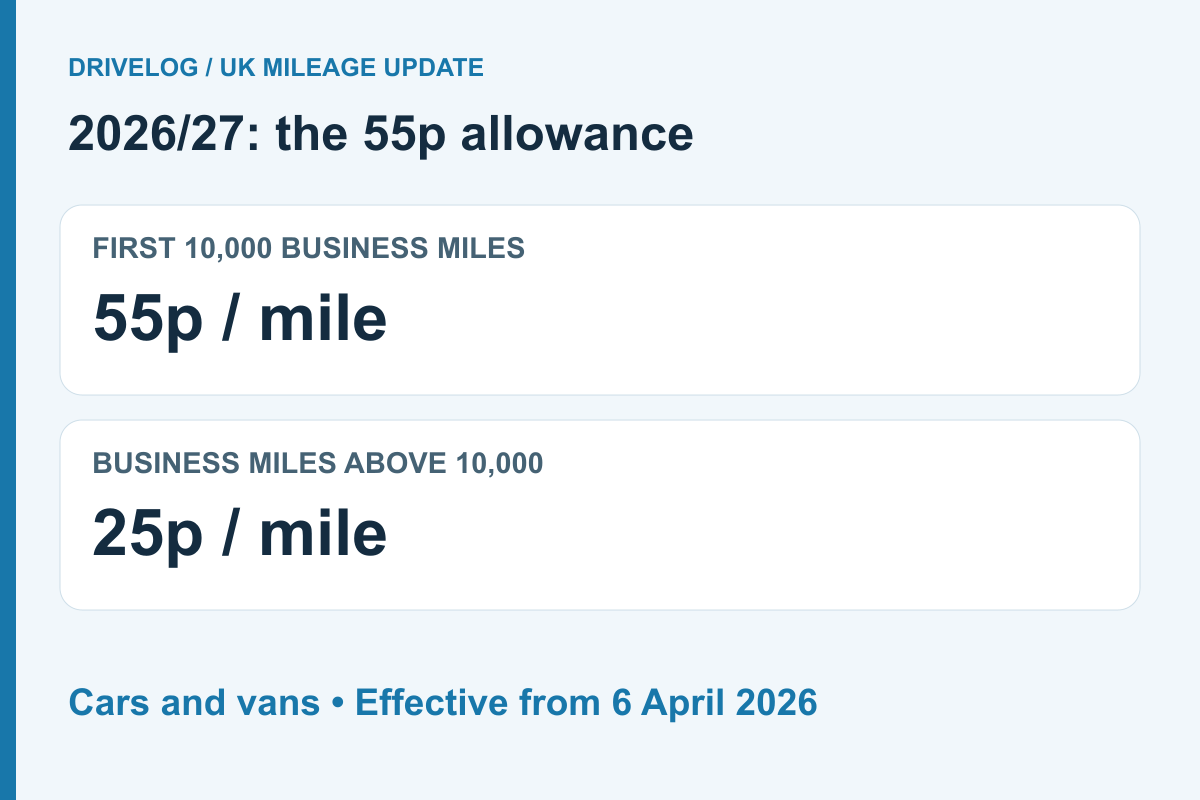
The HMRC car and van rate is 55p per business mile for the first 10,000 miles, then 25p, effective 6 April 2026 for the 2026/27 tax year. The increase from 45p was announced on 21 May and applied retrospectively.
Official HMRC AMAP rates:
- Cars and vans: 55p per mile for the first 10,000 business miles, then 25p per mile
- Motorcycles: 24p per mile
- Bicycles: 20p per mile
For 2025/26, the first-tier rate remains 45p. Use the tax year of the journey, not the year in which you file. Source: HMRC mileage and fuel allowances.
Track your business miles now in DriveLog and keep your records clean before filing.
Official HMRC Mileage Rates for 2026/27
| Vehicle type | Official 2026/27 rate | Notes |
|---|---|---|
| Cars and vans (first 10,000 miles) | 55p per mile | AMAP |
| Cars and vans (over 10,000 miles) | 25p per mile | AMAP |
| Motorcycles | 24p per mile | AMAP |
| Bicycles | 20p per mile | AMAP |
What Changed During 2026?
This was a policy increase, not a routine annual adjustment. HMRC’s mileage-increase announcement explains the May announcement and its retrospective start date. The rate beyond 10,000 miles, and motorcycle and bicycle AMAP rates, did not change.
For how to review earlier claims and employer payments, see what the 55p increase means for your mileage records.
Company cars use different rules
AMAP covers business use of an employee’s own vehicle. Company-car fuel reimbursement uses separate advisory fuel rates, which are reviewed quarterly. The current table was effective from 1 September 2026 when this guide was checked. Consult the dated HMRC table for the relevant fuel type, engine size or charging location; do not use the 55p AMAP rate for company-car fuel.
What to Do for 2026/27 Claims
If you searched for hmrc mileage rate 2026 because you need to prepare now, use this workflow.
1. Log every business trip from day one (6 April 2026 onwards)
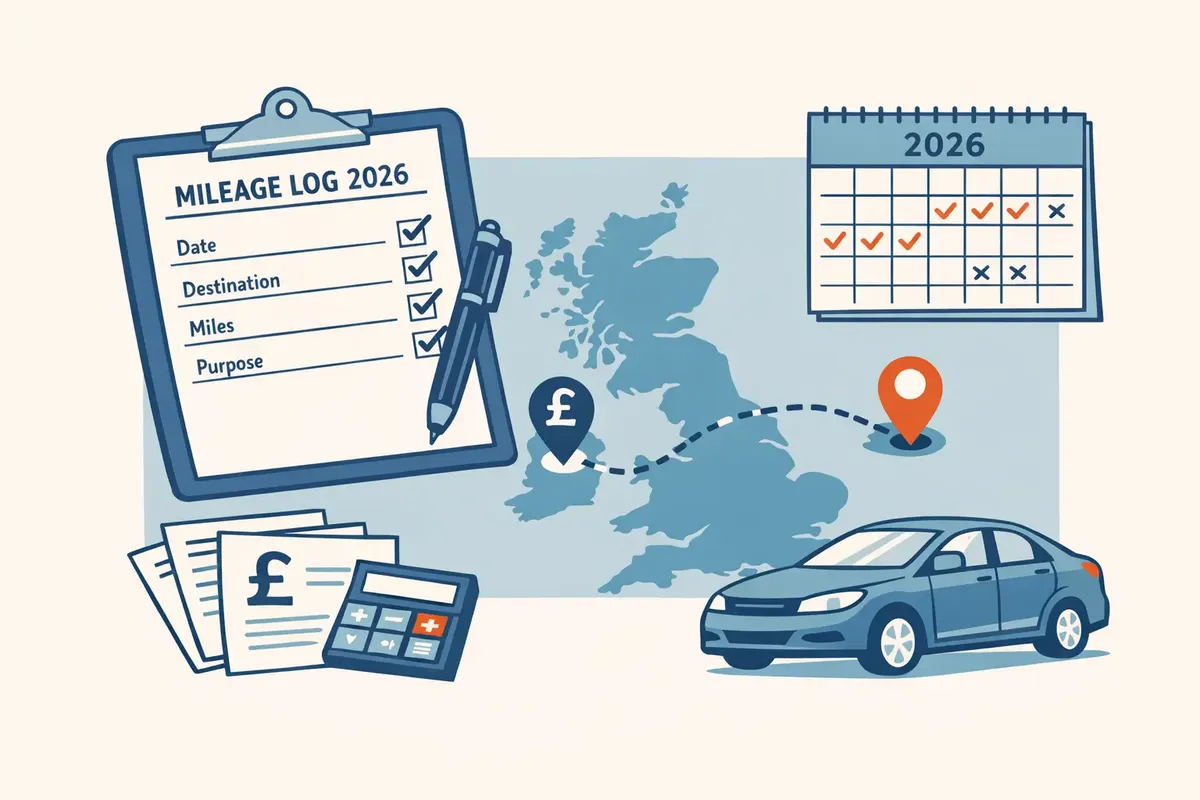
Record each journey with:
- Date
- Start location and destination
- Business purpose
- Miles driven
- Odometer context if available
Keep dated records so you can apply the correct tax year and rate to each claim. Include start and end postcodes when preparing an employee tax-relief claim.
2. Apply the correct tier at 10,000 business miles
For cars and vans, apply:
- 55p for the first 10,000 business miles in the tax year
- 25p for additional business miles
3. Keep personal and business miles separate
Whether you are employed, self-employed, or running a limited company, separating personal from business mileage is essential for defensible claims.
4. Keep evidence beyond the mileage total
Mileage logs are strongest when supported by context: calendar events, work appointments, invoices, or client notes.
Employee vs Self-Employed: Where These Rates Are Used
Employees
Employees commonly use AMAP where they travel for work in a personal vehicle. If an employer pays below AMAP, Mileage Allowance Relief may be available on the shortfall. This is tax relief at your applicable tax rate, not a pound-for-pound payment of the difference. Employers are not required to reimburse at the approved rate. See HMRC employee guidance.
Self-employed people and sole traders
Eligible sole traders and partnerships can use simplified vehicle expenses: 55p for the first 10,000 car or goods-vehicle business miles and 25p thereafter for 2026/27. This reduces taxable profits; it is not an employee reimbursement. Eligibility and vehicle-method restrictions still apply, and limited companies cannot use the simplified-expenses scheme.
Limited company directors
Directors using personal vehicles for company business typically reimburse at HMRC mileage rates to keep treatment simple and auditable.
For year-end prep, this companion guide may help: UK tax year-end mileage checklist (2025/26).
Example Calculations Using Official 2026/27 AMAP
Example A: 8,000 business miles in 2026/27
- 8,000 miles × 55p = £4,400
Example B: 14,000 business miles in 2026/27
- First 10,000 miles × 55p = £5,500
- Remaining 4,000 miles × 25p = £1,000
- Total = £6,500
Example C: 2,500 motorcycle business miles
- 2,500 miles × 24p = £600
These are approved mileage amounts, not guaranteed employer payments or cash tax refunds.
Official HMRC Sources
- Rates and thresholds for employers 2026 to 2027
- Mileage allowance rules for employee travel
- Advisory fuel rates
FAQ: HMRC Mileage Rate 2026/27
What is the HMRC mileage rate for 2026?
For HMRC AMAP, 2026/27 uses 55p per mile for the first 10,000 business miles in cars/vans, then 25p; 24p for motorcycles; and 20p for bicycles.
Has HMRC officially announced the 2026 mileage rate yet?
Yes. The increase to 55p for the first 10,000 car and van business miles was announced on 21 May 2026, with effect from 6 April 2026. The rate above 10,000 miles remains 25p.
Is there any HMRC mileage change for 2026/27?
Yes. The first-tier car and van rate increased from 45p to 55p, backdated to 6 April 2026. The higher-mileage, motorcycle and bicycle rates remain unchanged.
What records do I need for a valid mileage claim?
Keep a contemporaneous mileage log with date, route, business purpose, and miles driven, plus supporting context such as calendars, invoices, or appointment records.
Is this relevant to both employees and self-employed drivers?
Yes. The practical use differs by tax treatment, but both groups rely on good mileage records and current HMRC rules.
Keep Your Mileage Records Ready
Do not rely on memory at year end. Keep every business trip logged as it happens.
Download DriveLog and keep your 2026 mileage records accurate from the first trip:
- Automatic trip capture
- Easy business/personal classification
- Clean exports for accountant review
Need setup guidance? See our iPhone mileage log guide.