
Product
HMRC Mileage Rate 2026 Prediction: Why We Expect No Change
February 18, 2026 • 11 min read
Prediction status (February 18, 2026): HMRC has not yet confirmed a new AMAP table for 2026/27 in the context most people mean when they search “hmrc mileage rate 2026.” This page is a forecast, not an official HMRC announcement. We will update this article as soon as HMRC publishes fresh guidance.
Quick Answer: HMRC Mileage Rate 2026 Prediction
Our prediction is simple: no change.
For people searching for hmrc mileage rate 2026, we expect HMRC Approved Mileage Allowance Payments (AMAP) to remain:
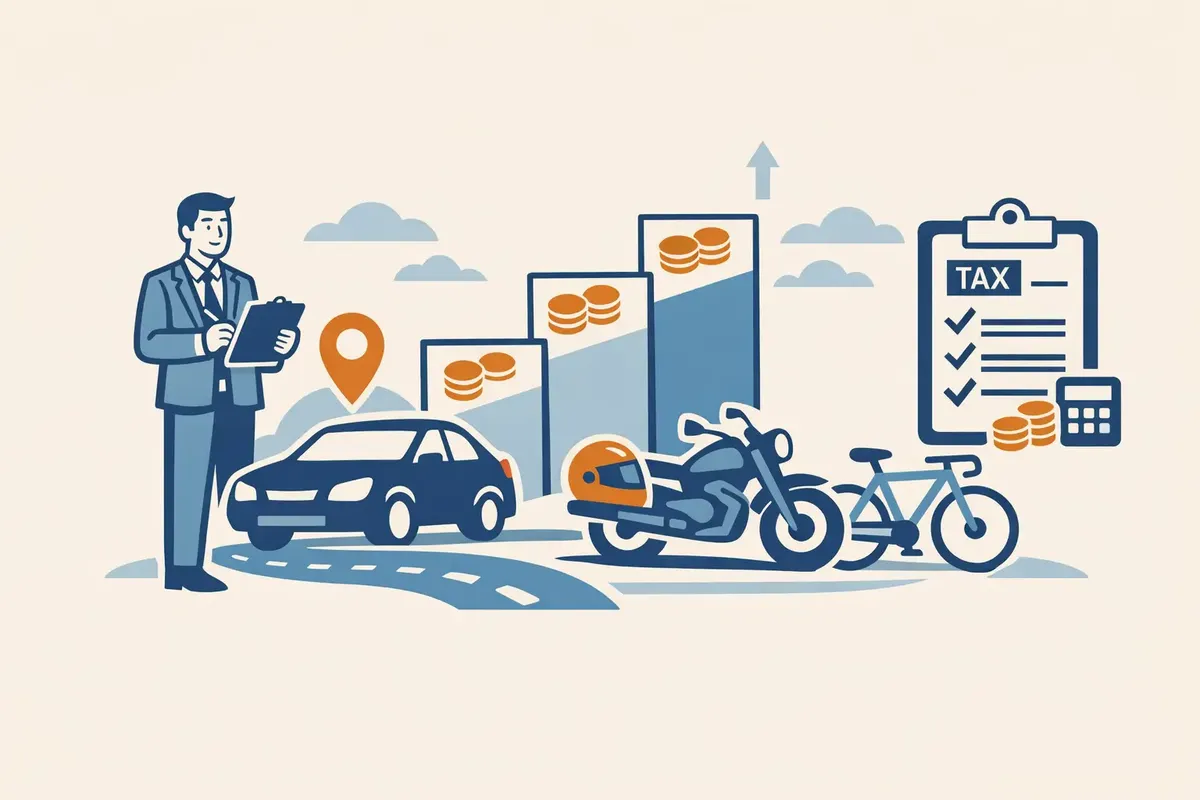
- Cars and vans: 45p per mile for the first 10,000 business miles, then 25p per mile
- Motorcycles: 24p per mile
- Bicycles: 20p per mile
These are the same figures UK taxpayers and employers have been using in recent years. Until HMRC says otherwise, this is the most practical working assumption for planning mileage claims and reimbursements.
Track your business miles now in DriveLog while you wait for official confirmation.
Predicted HMRC Mileage Rates for 2026
| Vehicle type | Predicted 2026 rate | Prediction confidence |
|---|---|---|
| Cars and vans (first 10,000 miles) | 45p per mile | High |
| Cars and vans (over 10,000 miles) | 25p per mile | High |
| Motorcycles | 24p per mile | High |
| Bicycles | 20p per mile | High |
Why this prediction is “no change”
We are not guessing blindly. The no-change forecast is based on three practical signals:
-
Long-standing AMAP stability HMRC mileage allowance rates are usually sticky over long periods. That history matters more than short-term speculation.
-
Policy behavior When HMRC updates travel-related allowances, changes are usually explicit and clearly published. In the absence of a published revision, the conservative assumption is continuity.
-
Real-world payroll and expense operations Most UK employers need predictable reimbursement rules. Sudden, frequent changes to AMAP rates would create unnecessary friction in payroll and expenses.
What to Do If You Are Planning 2026 Claims
If you are searching for 2026 hmrc rate because you need to prepare now, use this playbook:
1. Log every business trip from day one
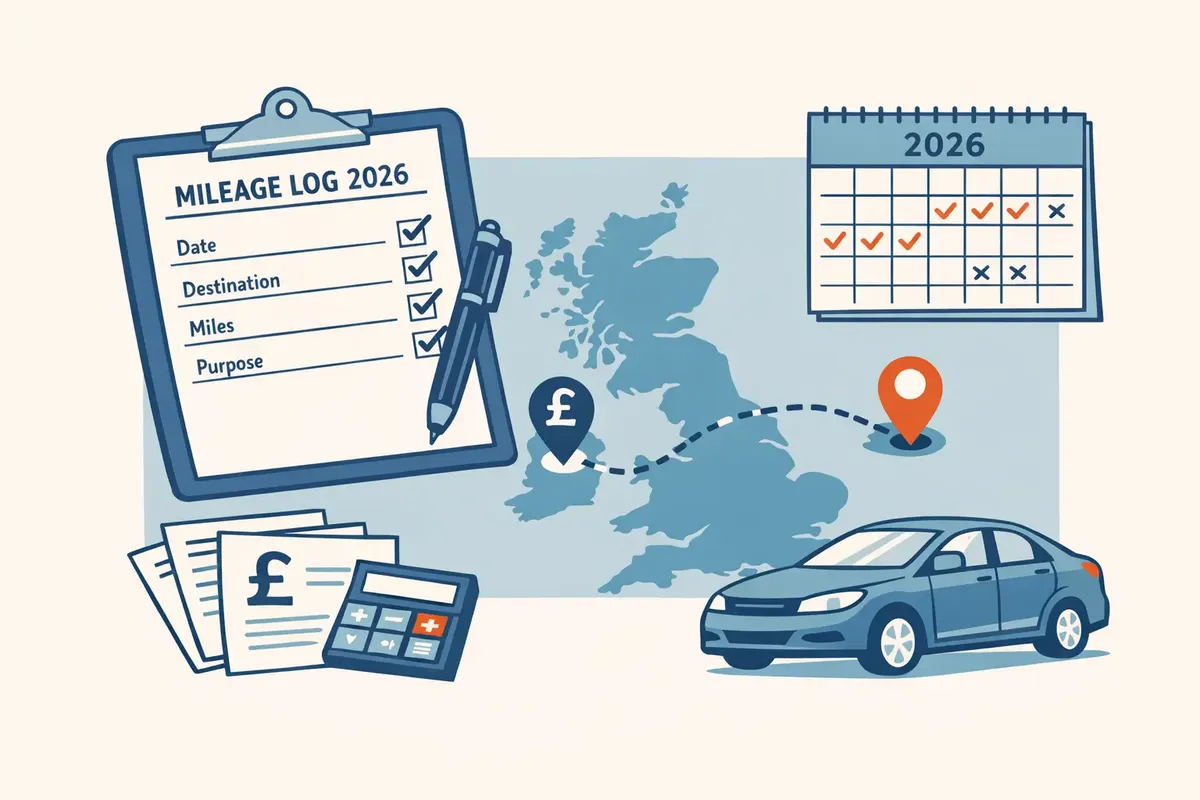
Record each journey with:
- Date
- Start location and destination
- Business purpose
- Miles driven
- Odometer context if available
A clean log matters more than trying to optimize pennies later.
2. Use the predicted rate for planning, not final tax advice
For budgeting and monthly forecasting, apply the predicted rates above. For final tax submissions, always align with the latest HMRC guidance available at filing time.
3. Keep personal and business miles separate
Whether you are employed, self-employed, or running a limited company, separating personal from business mileage is essential for defensible claims.
4. Keep evidence beyond the mileage total
Mileage logs are strongest when supported by context: calendar events, work appointments, invoices, or client notes.
Employee vs Self-Employed: How the 2026 Rate Usually Gets Used
Employees
Employees often use HMRC mileage rates where an employer reimburses travel in a personal vehicle. If your employer pays below AMAP, you may be able to claim Mileage Allowance Relief on the difference.
Self-employed people and sole traders
Self-employed taxpayers often use mileage rates as a simplified basis for vehicle expense claims, subject to HMRC rules and method consistency.
Limited company directors
Directors using personal vehicles for company business typically reimburse at HMRC mileage rates to keep treatment simple and auditable.
Example Calculations Using the 2026 Prediction
Example A: 8,000 business miles in 2026
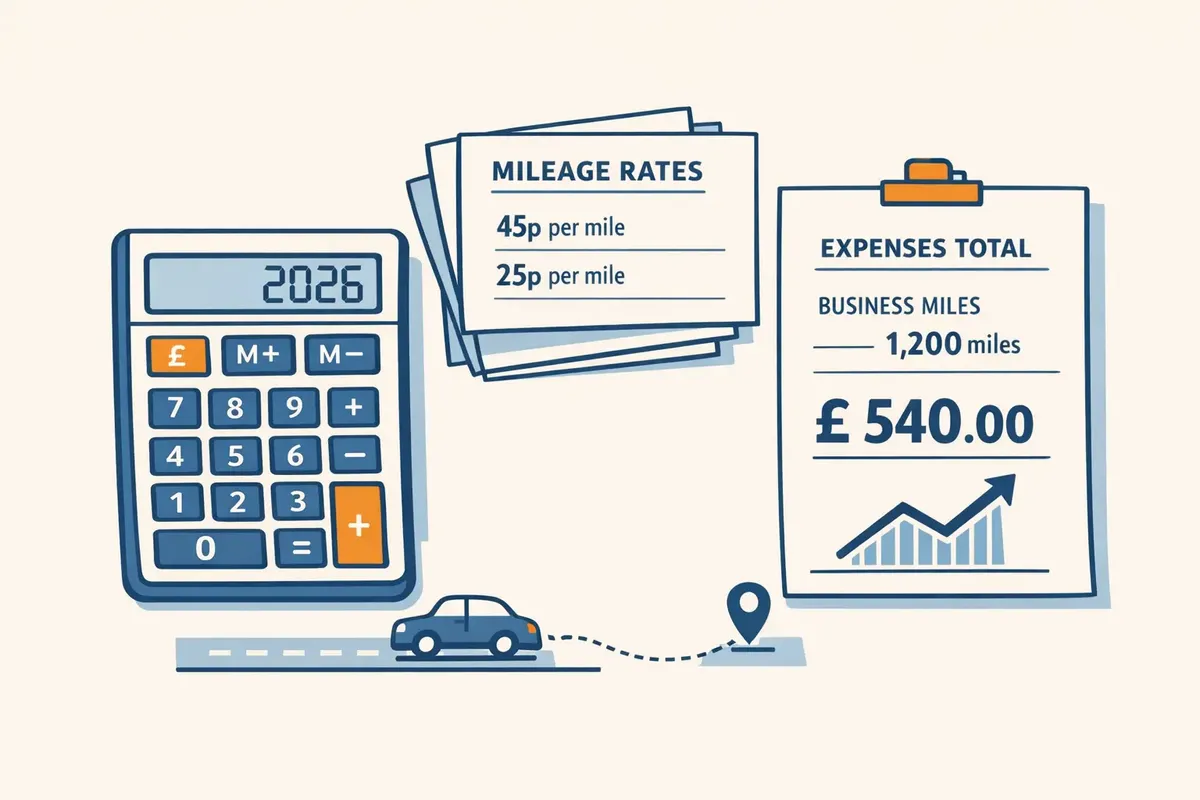
- 8,000 miles x 45p = GBP 3,600
Example B: 14,000 business miles in 2026
- First 10,000 miles x 45p = GBP 4,500
- Remaining 4,000 miles x 25p = GBP 1,000
- Total = GBP 5,500
Example C: 2,500 motorcycle business miles
- 2,500 miles x 24p = GBP 600
These examples are planning estimates using the predicted unchanged rates.
What If HMRC Announces a Different 2026 Rate?
If HMRC publishes an updated table, do three things immediately:
- Freeze your current period totals and tag them by date range.
- Apply the new rate from the relevant effective date.
- Keep an audit note explaining when and why your rate changed.
This avoids messy year-end backtracking and gives you a clean compliance trail.
Why This Post Targets “HMRC Mileage Rate 2026”
Keyword tools often under-report new-year intent before official announcements, but the user behavior is real: people search for next-year rates in advance.
This page is intentionally built for that intent:
- It answers the exact query quickly.
- It states what is prediction vs what is official.
- It gives a practical plan you can use now.
- It will be updated as soon as HMRC guidance changes.
FAQ: HMRC Mileage Rate 2026
What is the HMRC mileage rate for 2026?
As of February 18, 2026, this page is a prediction. We expect no change: 45p for the first 10,000 business miles in cars/vans, then 25p, plus 24p for motorcycles and 20p for bicycles.
Has HMRC officially announced the 2026 mileage rate yet?
At the time of writing, we are treating this as an intent-led forecast page rather than a confirmed official-rate update. Always check the latest HMRC guidance before final submission decisions.
Can I still use 45p per mile in 2026?
For planning, many people will use 45p/25p until guidance changes. For final claims and reimbursements, use the most current HMRC rules in force for the relevant period.
What records do I need for a valid mileage claim?
You should keep a contemporaneous mileage log with date, route, business purpose, and miles driven, plus supporting business context where possible.
What happens if HMRC changes the rate later in the year?
Split your records by effective date and apply the updated rate only from that date onward. Keep a short audit note explaining the transition.
Is this relevant for employees and self-employed drivers?
Yes. The practical use differs by tax treatment, but both groups rely on good mileage records and current HMRC rules.
Start Tracking Before the Official Update
If you wait for the official announcement before tracking, you lose data you cannot rebuild cleanly. Start now, keep complete trip records, and adjust rates later only if needed.
Download DriveLog and keep your 2026 mileage records accurate from the first trip:
- Automatic trip capture
- Easy business/personal classification
- Clean exports for accountant review